All content on this blog is copyright by Marci Andrews Wahlquist as of its date of publication.

Wednesday, June 21, 2017

Memoirs of Lloyd Alvero Read, parts 1 and 2

These memoirs of Lloyd Alvero Read come from my interviews with him May–July 1980. I wrote this in 1st person as if these were his actual words; he didn’t want to be tape recorded, so I wrote what he said as fast as I could. Anything in square brackets is explanation I felt useful to insert. See notes at the end for further information. —MAW.

Contents

1 Introducing Ancestors

2 Childhood and Youth

Early Days
Starting School
Holidays
Early Training in Christianity
More School
Chores and Jobs
Portland High School

3 Responsibilities

4 Shifting Fortunes

5 I Retired and Retired and Retired . . . 

6 The Ending


1 Introducing Ancestors


My father was Virgil Henry Read, the son of C.K. and E.N. Read of Aumsville, Oregon. My mother was May Corlinda Robertson, a daughter of D.W. and M.M. Robertson who came from St. Joseph, Missouri and lived in Salem, Oregon. Mother was about 5’6” with blue eyes and dark brown wavy hair. She was always thin. Her mother, Mary Malinda Hill Robertson, had blue eyes and wavy gray hair. She was reputed to come from a wealthy, plantation-owning family somewhere in Maryland that disowned her for marrying “beneath” her. She was a tall woman, about 5’8” or 5’9”, and though she was heavy set, she wore fashionably short skirts around the 1920s. Mother’s father was Daniel Webster Robertson. I was a great admirer of my Grandfather Robertson. He had a long beard; he never shaved. He never wore it really long, and when he trimmed his hair and beard it was a home project for all. He had blue eyes, a prominent nose, and thick, wavy hair. He farmed and would work for free for his neighbors.

D.W. Robertson
The Robertsons came to the Cloverdale area in 1873 from Missouri. They were very nice people and were jokers, all of them. They liked to take the line of least resistance and Grandma Mary had a bit of the “keeping up with the Joneses” about her. They were mostly farmers who didn’t observe holidays, except the 4th of July, when some of them would go up to Sublimity and get drunk. But not Grandpa; he was a teetotaler. They were Presbyterians, and Grandpa taught the adult Sunday School. He was also a schoolteacher at the grade school.

My mother never talked too much about her girlhood. She liked music and was a good singer. One thing she did as a job during her teens was to do housework for neighbors who were invalids or who had new babies—wherever there was a need. The social life for young people in this area back then consisted of weekly Lyceum-type shows, using all the local talent. There might be elocution or public speaking, music, or dancing. She loved to go to the dances and the other church or public entertainments. My father attended these entertainments, and he might have gone to a Saturday night dance once or twice but he never learned to dance. He and Mother probably met at one of those entertainments. [Once May Read told Fred Andrews, “I used to love to dance, but Mr. Read didn’t hold with dancing.” Lloyd said if he held that view, it was because he never learned how.]

E.N. Porter Read
My father—it’s hard to describe him. He was a handsome man, a nice-looking guy. My mother said once someone said to her, “Mrs. Read, aren’t you afraid your husband attracts attention?” And Mother answered, “I’d hate to be married to a man that other women didn’t notice!” He was 5’10½” tall, with blue eyes and brown hair. He was the oldest of his family, with Sarah, Silas, Eva, Ethel, Nettie, John, George, and Jessie following. Silas was an engineer at OSC in Corvallis for 35–40 years. John was a plasterer. Nettie was a Latin teacher at Oregon School of Education. George was deaf because he had had diphtheria as a child of 7 and there was no proper treatment for it at that time. He farmed; and he never married. Sarah took care of him.


My Grandmother Read was very smart. She never took organ lessons, but she learned to play by watching and by ear, and she could play very well. She learned sign language for George. She died about 1922. She always said to me, “Be a good boy. Be a Christian and attend your Sunday school and church.” Going to church was not a ritual with her; she wouldn’t miss it. On the rare occasion she couldn’t go she was depressed. I remember her talking about the Christian life even before I remember Mother and Father doing so, though they were strict too.


My parents didn’t send us to church, they took us. My father encouraged us to study our Sunday school lesson at home and to read the Bible. Mother read the Bible to us. Mother sang with us, out of the little Gospel Hymns No. 5 book. She had no music lessons, but she could pick out the tune by ear and then pitch it so we could sing it. We didn’t have a piano or an organ in our home—they couldn’t afford to make payments on something like that. My dad liked good music, but he couldn’t sing—not too tone conscious. Mother had a good voice. My father’s sisters Nettie, Jessie, and Eva all played the organ and sang too. Jessie was always singing. She was only seven years older than I was and was always leading her nephews and nieces around. My father was very religious. It was a way of life for him. His family was everything to him. All his money he spent on his family. He never spent money on himself. When he was away from home on his mail runs, he’d stay in his room, never go out for entertainment or anything. Father didn’t play games; he wasn’t interested in them. No horseshoes or golf. If he went with others to the golf course, he’d caddy for them. He was very unselfish, a wonderful man.

He was a very smart man. When he was young the family lived in the big house at Hall’s Corner during the summers, and in the winters they moved in to the house by Mill Creek in Turner, where my dad attended Turner Elementary School through 8th grade. He graduated from high school, having attended in both Salem and Stayton. He went in to Salem to live with his sister Eva and attend Willamette University for a time, studying business management, but he didn’t stay long enough to get his degree. He was always reading a newspaper or magazine to keep himself informed, Saturday Evening Post, or Colliers. He could converse with anybody on any topic. Technical language never bothered him—he could listen to it and understand difficult details.

My parents met in the Turner-Aumsville area and were married at the home of the Rev. K.H. Sicafoos in Salem, Oregon on October 23, 1889. In those days there were no church weddings; couples mostly went to the minister’s home. My parents had to go to Salem with a horse and buggy back then, and the road was dirt, full of pot holes. If it wasn’t raining and muddy, it was dry and dusty. With my parents at the wedding were his sister Eva and her husband Allan Foland, and Mother’s sister Alice and her husband, Martin Olsen. The newlyweds moved to a house in Turner near Mill Creek, and Mother kept it as a boarding house as a temporary expedient for the family. She rented rooms to people who took their meals with my folks. She was pretty resourceful. She ran that boarding house until after Ross was born. Meanwhile, my dad wanted to escape farming, so his father bought a grocery store in the Odd Fellows building and ran it. He went broke—he wasn’t too proud of that. He turned the store over to his brother Silas, whose partner was Irwin Robertson, Mother’s uncle or something [Irwin was her father’s half-brother]. They ran the store successfully for a number of years.

Lloyd Read's birthplace in Turner
My grandfather Read furnished the money to buy my father that store in Turner. Kenneth Porter tells the story that a neighbor’s dog killed Grandpa’s sheep. He shot the dog and was sued for his land, where the big old house stood. He had no fight left in him, nor did my father. It was the Robertson side that has the fight and the temper. Kenneth says that’s how he lost his land and the old house.
C.K. and E.N. Read home near Turner, Oregon


2 Childhood and Youth


Early Days

I, Lloyd Alvero Read, was born August 4, 1890 in a house in Turner, Oregon. Grandma Read came to help with the birth. They had a doctor come, although midwives were common then. In Turner at that time were a post office, the Bank of Turner (the Robertsons had something to do with that), two general merchandise stores, a feed mill, a grain elevator, a weekly newspaper, churches, and the offices of the justice of the peace. There was also a doctor. And a passenger depot for the two trains each way each day that came through. Cornelius ran the drug store, which we called the OHPC (One Horse Pill Concern).

I can tell you a little about my early incidents. In 1891 I was present at the dedication of the Turner Memorial Tabernacle, but I don’t remember the occasion very well. I do know my Robertson relatives did most of the framing and carpentry work on the Tabernacle. In January 1892 my sister, Letha Alice Read, was born in Turner. I didn’t mind when she was born, nor when she started howling. But when she went on howling for eighty years and it got such results, I began to mind. But sisters are a necessary evil and you can put up with them when you put your mind to it. My brother Ross Earl Read was born July 24, 1893. I remember Letha sitting on the floor crying after Ross was born. She said she was neglected. Ha! She was spoiled. But she did make a good playmate at times.

In the fall of 1893 my father and three friends took the Civil Service exam. Alvin Chase Baker, whose father owned the hotel across from the depot, at 3rd St. and the tracks, was one of them. Smith Allison was another. He had come here from Illinois or Indiana and gotten acquainted with Chase Baker and brought his family to Turner to farm. Ollie Richards was the third. My father followed Ollie in; Ollie convinced him to take the exam with him. All four men got appointments right away in the Railway Mail Service. My father took the run out of Tekoa, Washington to Wallace, Idaho. We moved to Tekoa. Father gained much experience in handling mail as many men were working in the mines along this rail route.

As seniority rules prevailed in this service and the whole area was growing, Father had the opportunity to bid in a “run” on the railroad from Woodburn, Oregon to Natron, up the Willamette River east of Oakridge. We moved from Tekoa, Washington in late 1894 or early 1895 to Woodburn, Oregon. My father remained on this run for four years, and there my brother Guy Raymond Read was born December 15, 1895. Father’s mail run went from Woodburn down through Aumsville, Stayton, Scio, and Oakridge. Mother took us down to see him working, and I got to go in the mail car.

In Woodburn I remember a few things. We lived in two houses in Woodburn. I can remember we lived in one house at first, and then we moved to a house across the street from the Presbyterian Church, which we attended. The minister’s wife, Mrs. Grant Corby, Mildred Corby, organized the Junior Christian Endeavor, which the youngsters attended. And the Sunday School teacher used to give us bright gold ribbon bows to signify a good attendance record. I remember once a big fire broke out downtown at night. Two blocks of the buildings downtown were destroyed, and the blaze sent a brilliant light into the sky for many miles around. It had started in the bakery where we used to get nickel loaves of bread and great big cookies; an oven caught fire and spread. We went downtown to see it, and I remember people being taken out of an upstairs window. I recall a parade by the Salvation Army once, and the big bass drum, tambourines, and castanets attracted me, and their “Stand up for Jesus!” got me excited. Once we went to a revival meeting in the Armory, where Ross decided suddenly to let out some war whoops. My father took him out to “paddle some of the Robertson out of him.”

At home we used kerosene lamps, and my mother had a small hand lamp with a handle on the bowl to carry upstairs for us to go to bed. We had wash basins that were large bowls on the cabinet. The wash tub was gotten out every week for our baths, and the water was heated on a wood stove. We didn’t have newsboys in those days. You’d buy your papers in the grocery store. In Portland though, the newspapers were delivered. A weekly, the Woodburn Independent, was printed right there and bought at the shop.

We went out to Grandma Read’s near Aumsville from Woodburn two summer vacations, and from Portland for one vacation. She had inherited part of her father’s old donation land claim, the William Porter place. She inherited the section just east of the original house, and her half-brother inherited the section that is about 500 feet north of Shaff Road. When you drove through the gate to Grandma’s, there was a grape arbor over it loaded with Concord grapes.

We three kids were born together, Ross, Letha, and I. Once when Ross was 3 and I was 6, Ross got a doll for Christmas, a little china thing about five inches high. He was showing it off to a neighbor girl, and he dropped it. Oh no! But they looked, and the doll was all right. Ross, with happy surprise, exclaimed, “See? Won’t break!” Ross and I didn’t play much together. There was three year’s difference in our ages. When he was born I readily accepted him though. I liked having a brother. I was proud of him and his progress. I showed him off. But Letha took care of him. I played with Letha more, but we three played together too—Letha and I provided the agenda, and Ross came in as a third party. The three of us pretty much took one another for granted.

In December 1897 my father traded runs with a Mr. Lee Campbell, who did the run from Portland to Seattle. Our family rented Mr. Campbell’s house in Portland, 252 E. 39th St. (old number), now SE 39th and Madison, then a block north of Hawthorne and two blocks outside the east city limits. The rent was $10 a month. In Portland there were street lamps, which intrigued me. The streetlight on the corner shone into our bedroom at night and made a pretty pattern on the plaster wall. I liked the flowers there in the summer, and in the spring there was a profusion of buttercups. There were marguerites, Mt. Shasta daisies, wild irises, and we’d put great bouquets of them into Mother’s fruit jars. She’d send us for wild hazelnuts, making it a game and telling us to see how many we could each get. Then we’d take the burrs off the hazelnuts before they got dry. When we were finished one time, we had a 50-pound flour sack full of shelled hazelnuts.

When I was seven I started doing chores around the house. I had to do the dishes. We had a garden that I worked in with Mother, and we eventually had three cows and a bunch of chickens.

Our first cow’s name was Dolly. My folks bought her from Uncle Martin and Aunt Alice Olsen about 1898 [Alice was his mother’s eldest sister]. Uncle Martin took the cow from Plainview twelve miles into Albany and put her on the riverboat Altona and sent her up the Willamette River to Portland. We went down to the dock at the foot of SW Alder St. and walked the cow home three miles. Dad led her, but I went along to help. There was a barn 300 feet away from our house that we rented. Mother and I would go down every morning and evening while she taught me to milk. If Father ever milked, it was in an emergency. We’d get a chain and hook it to the ring in Dolly’s halter and stake her in an empty field. There was lots of vacant property at that time. I learned a lot about animals and how to take care of them. I learned how hungry they always were! I put Dolly where the grass was best.

I liked acquiring little brothers. Before Guy was born, my parents had said, “There’s going to be an addition,” and I thought that was pretty nice! I liked anticipating it all, looking forward to his coming. A little brother to me was like getting a doll or a new toy. The newness never seemed to wear out. I still consider them that way. We kids stuck together.

Starting School

Sunnyside School in later years
I started school in February 1898 in the Sunnyside School in Portland. I wore knee trousers, a plain shirt, and suspenders. My shoes were shined the Saturday night before. I wore full length ribbed stockings, held up by elastic garters. Mother took me down there, and school had been in session a week. Such a strange world. I was older than the rest, but Mother had taught me to count and to make letters and figures on a slate. That first day Mother sat up front for an hour while I got settled, assigned to a desk, and was given a new slate and a new slate pencil. My teacher’s name was Miss Elva Dolan. She was very sympathetic, very typical; she knew how to handle little children. She never married. The finest thing happened after I had been there a little while: a bell rang, and we had a 15 minute recess, twice a day! We got to play on the play ground, and five minutes before time to go in, an electric bell would ring again and we’d line up in our class rows. At noon I walked home for lunch, six blocks. I always walked or ran. When Letha started, she always had to run.

They did not keep me in first grade very long. I was in the second grade before the close of that semester. I had begun to develop self-confidence; so much so that I began to think it was because I was extra smart that I was being “skipped.” Now I realize that they were just giving me a chance to catch up with my age group. I did miss a few things when I skipped, but I managed to catch them later when I realized the ground the rest of the class had covered. I readily adjusted to the school world and just loved it.

Once we were all in school there wasn’t much time to play at home. We all had chores to help with, but we’d still play house with Letha, or hide’n’seek, or we’d play ball. We played catch. I could throw pretty good. And we played hide’n’seek clear up to the time I got married.

I remember going to get watermelon, once while we lived there, Letha and I. I thought I was pretty strong and put the watermelon on my shoulder, but it fell off and broke. Letha and I ran home to get a dishpan and when we got back, a kid was picking up the pieces. He threw one against the fence and we got the rest. I remember July 4, 1900 when we had a big holiday party in Washington Park.

I remember one funny incident about a delivery man’s cigar. It was common at this time to run a monthly grocery bill. Mr. Pairan ran the store, and he had two sons. The oldest, Hector, about 40 years old, would come to solicit Mother’s order in the mornings. Then he’d come to deliver the order with his horse and wagon, and he’d be smoking a cigar. He’d also usually be bringing us kids candy from his old man. We had a wire fence around our yard to keep the dog in. It was low; I could jump it. Hector would park his cigar in the rail by the gate. We kids replaced the cigar with a fir cone once and hid to watch the results. He picked it up, looked at it, then looked around for his cigar, never saying a word. And he never did say a word about that. We liked him for that and didn’t play any more tricks on him.

Clifford was born in Portland on June 15, 1900, and in 1901 we moved to have more room to grow vegetables. In those days I got my first experiences at gardening, working with Mother. We’d spend 75¢ to a dollar for 100 pounds of potatoes. We raised tomatoes, beets, carrots, and turnips. Whatever wouldn’t keep otherwise was canned.

My schooling continued. Letha was always late to school. I remember the teachers saying as we were marching out of the building and back in, “Lightly on the stairs!” I loved recess, but I also got a lot of enjoyment out of school. I never did skip even one class and was annoyed when my brothers and sister brought home kids’ diseases and we were quarantined at home.

Mr. Hadley was my first principal. He was not a strict disciplinarian. When I was in 5th or 6th grade we got a new principal, Ed Curtis. He was an ex-Army sergeant and he was strict. He had a drum or the piano beat time for us to march out and march in again. It was a two-story building and our class was going up the stairs once, too noisy for him. He said, “Attention!” very sharply to us. “I said, Lightly on the stairs!” he bellowed at us. When I was in the 7th grade or thereabouts I remember him relating stories of his life to us. How he had been raised in southern Indiana, Illinois, and Ohio. How they stored apples in bins in the fall. As a boy he’d go into the apple bins and just sniff! “Boys and girls,” he’d say to us, “was there ever an aroma like that of apples!” We found out he was human too.

When I was about 12, I got into trouble with him. There was a creek running through the area just north of the school, and we were under orders not to go there during the rainy seasons. It was five feet wide and 24–30 inches deep. One day I was down there crossing, and I fell in. I slipped into the school unobserved and sneaked to the furnace room to dry off. Suddenly there was Curtis. “Lloyd! I thought I told you . . . !” I said quickly, “I was going over to the store and coming back I slipped.” He said, “Go into the furnace room and dry off.”

I recall a discipline matter concerning Ross, who was 12 at the time. We were playing “Run Sheep Run” and I got whacked myself. Then Ross was impudent to Mother and I smacked him and cut my knuckle. Letha had no respect for Mother and I often took her to task about it.
I express myself best when I’m being facetious. —Lloyd A. Read
When I drove the school bus at Stafford, I used to stop at the top of the hill, Pete’s Hill, from which you could see Canby, Molalla, and Oregon City. A boy was heard to say, “You can see all over hell from here!” A girl, hearing him, jumps up and says, “This I gotta see!” Her seat mate pulls her down. “Don’t worry,” she tells her, “you’ll see all that.”

Holidays

My favorite holiday I remember was the 4th of July 1900 when we all went on the streetcar to Washington Park and zoo. Back then that was the only park in Portland, the “City Park.” We took a lunch to eat, and there were fireworks—firecrackers, sparklers, roman candles, torpedos. The folks didn’t allow us firecrackers, but we liked the torpedos. They were little things that we threw down on the sidewalk and they’d go “BANG!” I recall Aunt Jessie once saying about the 4th of July, “Well usually around this area we go up to Sublimity and get drunk and everybody has a heck of a good time.” [Based on other things he said, this was one of his Robertson uncles’ wives.] She had a saying about how to plant a garden I always remembered:
Things you want to go down you plant in the dark of the moon.
Things you want to come up you plant in the light of the moon.
I recall New Year’s Eve was a big holiday for us; we always had a new year’s watch party at church. We played games, had eats and drinks, and at the stroke of twelve we blew whistles, and the factory whistles would blow.

At Valentine’s day I always took a valentine to the school teacher. It had to be a special valentine, and Mother always helped with it. We always had handmade valentines, very nice ones. I treasured a few of them.

Washington’s Birthday was a holiday from school. At school the day before, we’d have a patriotic program with a depiction of the boy chopping down the cherry tree, and then a play of Valley Forge where the audience would throw money to the soldiers.

At Easter time we colored eggs and hid them. Mother and Letha did the hiding, we boys did the finding. We went to Sunday school and church for the service, the girls wearing fancy clothes, and once I had to wear a bow tie. I didn’t like it. The church would be all decorated with flowers and was beautiful.

For Memorial Day, which we called Decoration Day—it was a holiday created to patch things up after the Civil War—there was a service downtown, city-wide, to which everybody came. There was a speaker, usually a musical solo, and a band concert that was very popular. We’d decorate the graves that day. Bands were very popular throughout the summer in the parks. We had a municipal band paid for out of taxes. There were a lot of community bands. Three or four nights a week we’d have a band concert in the park.

At Halloween time Mother didn’t allow us to go trick-or-treating. There were too many tricks pulled for her taste, tricks like hanging gates, tipping toilets, upsetting woodpiles, putting tires around the flag poles. One time in Aumsville when I was working at Lon Speer’s, we pulled a trick on the H.C. Porter Real Estate Office sign. Across the street was a barbershop where Max Ballou worked. He and I got a two-wheeled cart and a ladder and took that sign down and wheeled it to the depot where we hung it on one of the toilets. Two weeks later there was a school assembly where a lecture was given about such tricks!

One time there was a party at Wallace’s. He and I helped put up the electric line in Aumsville. They had incandescent bulbs, 60 watts. Sometimes one came disconnected and we’d kick the pole and the light would come back on. Observing us, Uncle Henry Porter (the one with the real estate sign) asked how to get the porch light at Wallace’s to come back on, and we said by kicking the porch pole. Didn’t work. Hurt his foot. He was mad at us!

I saw my first automobile when I was 13, in Portland [about 1903]. But one time around the time of the first automobiles coming out to the country, I was in Aumsville on the road through Aumsville to Turner and on into Salem, when along came Minnie [Porter], driving their new car. I yelled “Woman driver!” and climbed the nearest pole. She sailed by, yelling at me.

Thanksgiving was a school holiday. The folks usually had a dinner, but not turkey. Turkey raising was not a big deal around here back then. Mother was a good cook and she liked pork roast. It did things to my tummy. She used pork grease or lard for frying, or she’d cook the parsnips in the pork juice. She’d cook sweet potatoes separately. Most of the time Mother made her own bread. Three or four times a week she’d make fresh biscuits for breakfast.

Christmas was a big day for the kids. We’d hang stockings and get candy, oranges, bananas, mixed nuts, apples, and an occasional 15¢ toy in them. Letha and I were in charge of putting on a formal program. We’d sing, read articles, tell fables, and read the Bible. Clifford, being ten years younger, believed in Santa Claus. I helped fool him for a number of years. We had a tree and we’d put candles on it. There were small clip-on candle holders to hold the candles on the ends of the branches. There were no electric lights until our family was a good size. At school there was no prohibition on singing Christmas carols or Christian songs of any kind. Our teachers saw to it that we learned all the songs, and they taught the Christian story; there was no Santa Claus at school.

We had some other traditions and customs when I was young. Sunday was a day of rest, except we had to feed the stock of course. Sunday dinner was a big deal. All the girls tried to help, with Grandma in the middle of the kitchen giving orders. Then she’d get impatient with them and order everybody out so she could do things her own way. My aunts who were at home were always my idols.

For birthdays in our family we’d have a dinner in recognition of the occasion. Some little special something would be brought in and put on the table. And a cake. Mother could make a delicious loaf cake in a bread pan, without any frosting.

Early Training in Christianity

Mother read me the Bible before I ever started to school. Mother taught me to read by using the Oregonian and the Bible. I’d read the whole newspaper. I read the Bible next, and then started learning out of the hymnbook, Gospel Hymnbook #5. I liked to sing. Ross could sing pretty well. Mother taught me counting too, but not to write. Mother taught us that we were supposed to go to church and to believe every word, whether we understood it or not. I was intrigued by King James English. My favorite early Bible stories were: Daniel in the lion’s den [in Dan. 6]. Mother didn’t understand his prophecies, and neither do I!; Nebuchadnezzar’s dream [in Dan. 4]; the Hebrew children in the furnace [in Dan. 3]; Christ on the cross [in Matt. 27, Mark 15, Luke 23, John 19]; the Last Supper [in Matt. 26, Mark 14, Luke 22, John 13–17]; and Gethsemane [in Matt. 26, Mark 14, Luke 22], which is repugnant to some, but God couldn’t do it any other way. I was raised that way and believed it naturally.

In Woodburn we lived across the street from the Presbyterian Church and we went there up until I was age 7. The differences between the Presbyterians and the Christians weren’t stressed then. There was a difference to older people, such as the frequency in serving communion. In the Christian Church service, the emblems were served every time they meet. The Presbyterians did it more or less when it was convenient, and there was a problem with scarcity of wine due to a fermentation problem.

When we moved to Portland, right away we started attending the First Christian Church on the west side. We took the streetcar to get there. My parents were raised in the Christian Church, the old Aumsville Church. Mother never said anything about her church going when she was growing up. I know she was baptized in the Aumsville Church after her marriage. She was maybe raised Presbyterian. D.W. Robertson taught the adult Sunday School in that church. The preacher of the First Christian Church was John F. Ghormley, DDS. He had graduated from divinity school in Des Moines, Iowa, Drake University. When I was 12 he baptized me. He was a dedicated man, a fundamentalist who interpreted church procedure in a literal way. He baptized by immersion. He served the Lord’s supper every week. I’m not sure if Letha was baptized around that same time or not. Church and Sunday School to me were something to do, to learn in. I had the same motivation for attending those as I had for attending school, to help myself, to help others. Mother instilled in us the idea of giving service to others. She started me helping to dress my younger siblings and so forth.

I was baptized in early 1902 in the old First Church of Portland by the minister, the Reverend John F. Ghormley. When I was in 7th grade, or right after I was baptized, Mr. Ghormley organized a new church on the east side. It was a legal organization, with a board of trustees, an official board, and everything that was proper. It was within walking distance for us. They bought property for the church on SE 20th and Salmon, and they called it the Central Christian Church. It was first built with a barn-like structure, about 30 feet by 60 feet, and they called it a tabernacle. It was torn down in about eight years, in 1911. Ross and I tore the old building down. They built a new stone building, but it was too ambitious. A fellow with a lot of money put up the money, but when the church couldn’t make payments on the loan, he sold it to the Baptists and it became the Henson Memorial Baptist Church. So the Christian Church moved to a building vacated by the United Presbyterians on 12th and Taylor. The United Presbyterians had merged with the Presbyterians. Our organization first rented their building and then arranged to purchase it.

Later Dr. Ghormley went out to SE Portland and organized Kern Park Christian Church. My folks had moved to that area, so Mother and I attended that organization meeting. Although I was living with my parents when Mr. Ghormley organized Kern Park Christian Church in Portland, I did not become a charter member.

I think it was ambitious church politicians who split the Central Christian Church apart. One bunch moved to SE 20th and Hawthorne in about 1910. They bought an abandoned Catholic church building in Longhurst. We didn’t go along with these people. Lillie and I were married by then, and we lived in Lents, in SE Portland.

More School

I always loved learning. I enjoyed arithmetic and spelling; I also had reading, history, and geography. I was never a good writer; I did not stay in the first grade long enough for Miss Dolan to teach me much writing.

I liked Mrs. Cheney’s partial payments problems in arithmetic in particular. These problems were designed to trap the unwary, and one problem in particular bugged our class for several weeks. The terms were delineated; the book gave the answer but not the process. Mrs. Cheney said, “Lloyd! I don’t understand why you can’t get that.” I worked on that problem so hard and so often that I dreamed about it. Finally I dreamed the answer! I woke up at about 3 o’clock in the morning and worked out the correct solution. It was so plain to me! That one place where I’d failed to carry out a step was emphasized in my dream. Mrs. Cheney had always told us to carry places out two or three decimal places. Mrs. Cheney said, “Lloyd, you solved that problem!” I was acquiring a reputation as a mathematical wizard and was working out the problems for most of the class.

Mrs. Cheney’s husband was killed in an industrial accident when she was 22 years old with one son, so she went into teaching. The son was killed ascending a glacier on Mt. McKinley. Some years after I was out of school she died in a hotel fire. When I was 12 and became a Christian, she said to me, “I respect your religion; I wouldn’t change your reverence for God. But you know I lost my husband and son. Sometimes I wonder if there’s a just God.” I think you choose whether to believe or not. Man proposes, God disposes.

There at the Sunnyside School were nine grades in 16 rooms. There were A and B classes; A started in the fall and B started in the spring. You could start any time and pass to the next grade in the middle of the year. You passed every semester. The school could handle anywhere from 625 to 700 students. In 1904 there were 650 students.

In first grade we learned the capital alphabet, starting with A is for Apple. The teacher used the blackboard, and it was black back then. It changed to green when we were in fifth grade. In grades 1–3 we used a slate with a slate pencil which was like graphite, and a sponge to wipe it. Chalk was too messy for us to use. In fourth grade we graduated to using tablets and pencils, and we also started learning how to use pen and ink, with the pens being filled from inkwells or an ink bottle that sat in a little well in your desktop. Of course if you sat in back of a little girl with long pigtails, you might dip the end in your ink—but I didn’t go in for that kind of trick. We read from Cyr’s Readers, 1–5, and used Eggleston’s Reader to coach us in writing compositions and in learning English literature. We learned multiplication by squares. We had an arithmetic book, but they taught us to perform mental arithmetic, mental calculations. “Lloyd, what did you get?” was everyone’s question. I thought school was an adventure, a challenge. I was there to learn—I wanted all the secrets that were in those books! I had to open all of them to read and to study; I felt impelled. There were also lots of things I learned that weren’t in books at all. I was naturally inquisitive.

My best pal was Arthur Lynch in the 5th or 6th grade. We lived two blocks apart and we’d always run home together. We played together, tag or crack-the-whip at recess. During recess everyone had to run to use the toilet and get a drink first. We also played marbles. I lost a whole bunch. Mother said to me, “Where are your marbles?” I told her, “Jimmy won them.” She said, “I told you not to play for keeps.” I was crestfallen.

The school yard was enclosed by a rail fence and had no lawn, just dirt and patches of wild grass. There weren’t any automobiles around then, so it didn’t make any difference. On the next block north was a creek. We’d crawl through the fence and then practice jumping or even doing handsprings over the creek when it wasn’t full. That was the area where my family would go out to gather hazelnuts in the fall and where we’d gather wild strawberries too.

We had a lunch break from school and we’d go home to eat an entire meal. I’d have bread and milk, or sandwiches sometimes. We had a cow, and I milked her, so we always had fresh milk. Mother would make us biscuits in the morning and we’d have milk gravy on them, or we’d have boiled potatoes or bread with the milk. By 6th or 7th grade Mother made me take a lunch to school. I was very self conscious about it. I’d slide way down in my desk chair and try to hide while I ate. I didn’t want anybody to see me eat! The rest of those who stayed there to eat lunch would be going jabber-jabber-bite, jabber-jabber-bite. But I was bashful about eating; it was serious business to me!

I got noticed about it too. A little girl, Echo Tice, once wrote, “Wilt thou & he wilted” to me, and I was very upset about it. Mother said, “Now, you mustn’t pay any attention to things like that.” Later on I got back at her. Clarence Chandler and I were sitting in the front of our home room when we spotted her, and Clarence said, “Echo Tice. Oh boy, that’s the real thing!” and I replied, “Oh no, that’s just the echo!” Clarence’s sister Grace graduated with me and I had designs to get a date with her. It was 3¢ to ride the streetcar, and I didn’t have enough for both of us, so I asked her to walk home with me. She said no. By the time I reached the 9th grade (elementary schools included the 9th grade then), I was the youngest one in the graduating class in February 1904. I had completed the nine year course in six years. Had top marks most of the way. Even though I graduated before I was 14, I remember being interested in a little redheaded girl in the class, Genevieve Lyle. There was also another girl, Hazel Thornton. When the class graduated, this business faded out.

Chores and Jobs

I had chores to do when I was a boy. We had a cow that Uncle Martin and Aunt Alice sold us. I learned to milk from Mother. None of my brothers or my sister learned. I’d feed the cow and the chickens, and I cleaned out the pens. I worked with Mother in the gardens. We had about an acre of gardens, including a big blue Concord grape vine on an arbor.

Half the time I had to wash the dishes while Letha wiped them. She didn’t like to wash, and when it was her turn, she’d saunter around and waste a lot of time. But she was learning to cook, and she was a good cook. I liked to wash dishes. I also had to scrub the floor with a mop and a pail. I helped wipe the dust off the furniture. Mother had a carpet sweeper and I learned to use that. Once a week it was my job to scrub the back porch and the steps and wash the windows. My most hated chore was taking the chamber pots out to empty them.

We sold Dolly and bought another cow, named Beauty, who gave more milk that we could sell. We delivered all of the second milking from Beauty. I’d carry it in a can with a handle, a five-gallon can. It was never full, and at first when I was still pretty short, I had to hold it up so it wouldn’t drag. We bought another cow, and in 1903 I bought my very own first cow for $15 that I had earned from the milk money and from delivering newspapers in the Richmond area. I’d peddle milk, but later I got customers who’d come to the house. Peddling was undignified for an almost-graduate!

In 1904 my folks bought a lot at Mt. Scott, about 100 x 100 [feet], paying cash for it. We cleared the hazel brush off the lot, and I broke the ax clearing brush. Mr. B.F. Doty contracted for the house to build it.

The summer I turned 14, I worked out at Grandma and Grandpa Read’s all summer. I worked with Uncle George making hay. Grandpa hardly did anything. I think that that was the way those old farmers did: raise a family of boys, and when the boys were all old enough, let them take over so that Father could retire. Oh, Grandpa hoed the garden and filled the wood box, mostly with pitch and cedar, which kindled easily, but beyond that he didn’t do too much. Of course, he was 68 years old then [as if 68 were old; Lloyd was 90 when he was telling me this and still actively working in the yard]. His father [C.K. Read Sr.] had his original claim east of Hall’s Corner on the other side of the intersection, one mile east and one mile south. It was 60 or 80 acres east of Grandpa’s place. The grove where the house was is still there, 1000 feet south of Mill Creek. C.K. Read Sr. sold the place to the Turner heirs.

Neither my grandfather nor my father were very effusive about giving out information. They didn’t get a chance. Grandma did most of the talking. My father never had very much to say. Mother had plenty to say, most of the time.

Uncle George would drive the horse-drawn mower to cut the hay, and I drove the gentle old mare that pulled the hay rake. The hay rake had a seat and I’d ride on that. I think that’s the first year my Grandpa didn’t drive it. He had liked farming. After raking up a long stretch, there was a release lever to pull and it would drop the hay in a certain place. We’d rake up the hay into a pattern called windrows and then use pitchforks to hand stack it in shocks. A team would come through with the wagon to pick up the shocks, usually one man driving and one or two on the ground, and rack the hay on the wagon. Then they’d take the load piled 8 to 10 feet off the ground and drive it into the barn. The lazy ones would get up on the hay and ride in. It was nice to rest up there!

In the barn some people had a new invention, a mechanical contrivance with a rope pulley and a huge pincer-like fork with teeth that you could hook into each side of the hay while the horse pulled, and it would lift the hay to the top onto a track and put it in the haymow. That was a new thing. If you didn’t have that, you put all the hay into a hay barn, dropping each load and pushing it into the corners. We didn’t put it in the barn; we hand stacked it outside, built it up and topped it off to shed the rain. It was all mow, rake, shock, stack. We did a lot of hay that summer! The hay rick was huge. Mechanical balers had just come into use in that area then, a horse and a gear with a treadmill. Then when gas engines were perfected, they started attaching a gas engine. Custom balers went from one place to the next to do it all at the same time. So we stacked our hay to wait for them. But the baler was broken down and most of our hay got wet and spoiled that summer.

About 1900
Summers after that I got a job as a baler. I’d weigh the bales on platform scales and attach finger-length cedar tags with the weight on them to the wires. I tipped it to the fellow with the heavy hooks who piled bales six high and built steps eight bales high. A “bucker” was invaluable—a good one could keep up with the baler. If he couldn’t, it made everybody else’s jobs a little harder. The #1 man pitched the hay down onto the table from the 8–10' stack onto the 4' high table. It had to be thrown on flat so the man on the baler could use his pitchfork to scrape the hay into the mechanical arm. When you first started doing it, you’d sometimes get a pitchfork in the bale of hay. But I did all right. One man asked me, “How’d you like to learn to feed?” I said sure. He said, “Watch me and then I’ll watch you.” I did fine, never did feed a fork in there, and I saw him do it once or twice. I’d feed twenty minutes, then sit down twenty minutes. We tried to have a load there every time the baler arm came down. The baler-feeder man got the highest wages on the crew. The weigher had to care for the horses. The baler-feeder didn’t.

I had a lot of fun doing that. Met a lot of fine people, and rough people too, those who smoked, drank, talked rough. But they were all goodhearted men. They’d give you the shirt off their backs. I did that job several summers from ’04 until after Lillie and I were married. Then out with the haying and on with the harvesting: wheat, oats, barley. We mowed the grain. Earlier they had used a sickle or a scythe and then someone tied the bundles by hand. We used a mechanical “binder” that tied the bundles with a heavy binder twine. Then a “knotter” tied a knot around it. The bundle dropped on a rack that had forks out the back, and when we had four or five bundles a trip mechanism would drop the bundles. You’d stand the bundles up and put ten in a stack. The air would dry them previous to threshing, which was also custom done. We drove around the field and a spike pitcher threw the bundles on a rack to gather them into the barn. The thresher threw the bundle in heads first to separate the grain and the chaff. The grain came out the back chute into a waiting bag. When the bag filled up, it was sewn up and another bag was waiting. The threshing machine (separator) moved between two stacks and a pitcher would throw the stacks down into it alternating one stack and then the other. The thresher had a wood-burning engine at first, and then later a gasoline engine, and finally it was a combine. It used a dozen men and ten to twelve horses to pull it. When the threshing machine came to a farm community, the women would make food for the whole neighborhood, sometimes at the noon place and sometimes at the evening place. It was as much fun for the women as for the men. I’d hear my mother say things like, “I’m glad we’re going there, I sure like Aunt Deli’s biscuits.”

Portland High School

I started to high school in 1904. We’d go on the street cars, Harold Kendall and I. Harold’s mother was a widow and owned a mansion on the hill above us. We’d get the same car every day. We’d even run down the middle when the cars were delayed. The motorman and conductor, Mr. Traub, would take turns with us buying bags of lemon drops. Harold was a captain of the ball team and the pitcher. I played first base.

Up until the last year of high school I was small and the other fellows would push me around in fun. I got along well with most of them, but one, Ray Barksdale, was a head taller, and he was a football player. One time we were out in the hallway at the noon recess. Part of the floors in that school were supported by bars anchored to overhead supports. The supports also gave us sky lights along there. Ray got hold of me around the shoulders and said, “Read, you’re going up against those bars.” And up I went! My last year in school I must have grown a foot. I confronted Ray, and just looked down at him. He went away, didn’t run, just looked at me. I never got into fights at school. I never tried to intimidate anybody, except that one time. When I was younger, I was intimidated myself plenty! But when I got older and taller, I decided not to stand for it, and I didn’t.

I think about 1905 we went to the Lewis & Clark Fair which was held near our school and saw pictures of the Lewis and Clark expedition. [The Lewis & Clark Fair in Portland was sometimes called the World’s Fair of 1905.] There was a dirigible balloon piloted around at that fair. It was one of the first before the Zeppelin. The pilot that was mentioned was Lincoln Beechy. We thought things were quite modern around our school with dirigibles flying past our windows.
During that fair I went to watch the Portland Beavers play baseball. Actually I went all the time to watch them play, both before and after that time. Admission was 25¢ in those days for bleacher seats. But if I went by myself and got there at batting practice time, if I could catch a foul ball I got in free to sit in the grandstand. Many a time I did that.

I played baseball at school, but not on the school team. I wasn’t good enough to make the team. I’d sub for the first baseman sometimes. One time I was doing that, the score was 6–3 in favor of the other team. It was the bottom of the ninth inning and the bases were full; we were up. There were two outs and the coach was desperate. The pitcher was due up and he couldn’t hit anything. “Read, go in there, and hit that long ball. If you ever hit a ball hard, do it now!” The pitcher winked at me. The first ball was a strike. The next two he missed the plate. The next one, I hit it WHACK! over the outfield. Everybody was running, the three outfielders with their backs to the infield, and I got all the way around the bases with my three teammates.

In high school I remember memorizing Antony’s oration over the body of Caesar. I had some Greek too, under the tutelage of a minister. I was on the debating team and tried out for track and for the baseball team but didn’t make either one. Mother didn’t want me to run.

I got up early in the mornings to do my homework, about 4:30 a.m. I could do it so much easier then, when I could think clearly. I’d then catch the streetcar at 7:30 to go to school. We had classes from 9 to noon and then from 1:30 to 3:30. In my last year I had no classes the last period and I’d go home at 2:30. I did a lot of job work for the neighbors at that time. The school was in the upper west side of Portland. I’d ride one car to midtown, 3rd and Morrison, and then transfer. We lived out on the Richmond line at 3rd and Yamhill then. I was 123rd in my class in high school, out of 650. Portland High School was the only high school in the city at that time. The city population was about 125,000. Few ever made it to high school, and the dropout percentage was very high. High school graduates got jobs from guys who had dropped out before and gone into business.
Portland streetcar at 6th and Morrison, about 1905
Our present business system is going to fail. I can’t see competition like we have it succeeding too much longer. Its opposite is cooperation. Certain churches will have to rise up and take over business and establish a different way of doing things based on cooperation. We should have explored alternative energy systems 50 years ago instead of waiting until today. The Lord set gas here to tide us over from one period to the next, and the gasoline interim is drawing to its close. Right now Christian people attend to getting what they can instead of seeing what they can contribute. If you quit worrying about yourself all the time you’ll be all right. People think life is a series of rules and regulations that you don’t have to follow. The generation of “me” is prevailing over “my family”: there’s too much “I” in the world today.

During my teen years in the church we were perfecting organizations and increasing membership. The preacher who baptized me was a consecrated Christian. Many who are preachers now are church politicians instead. In the old days in Aumsville, the Aumsville Christian Church was led by Uncle Henry Porter, a deeply committed Christian man, very much the gentleman to all he ever met. And he helped the people of his church be the same way. But when he died it started disintegrating and it has disintegrated now.

My chums when I was in my teen years were Arthur Lynch, who had been my chum since grade school. He lived two blocks away. I also went around with Arnold Cook and Clarence Chandler. They were the cream of the crop. Some boys’ backgrounds were not too desirable. My folks didn’t encourage me to chum with them and I didn’t. I had a number of chums in high school. One boy, a Japanese boy, was named Oshimo and our main common ground was that we both wanted to get good grades. We studied together. There was a Jewish boy I palled around with who didn’t finish school. Ray Barksdale didn’t chum too much though we had some things in common; we walked out together at noon recess. He smoked cigarettes and drank beer though. He didn’t live in our high school area, so our time together was limited to school time. I was not a socialite. I didn’t start that until after high school in church.

When I was in high school, terms consisted of courses you elected to take. I should have taken Latin, but I took English instead. You’d choose a course and then take all the subjects within it. I added bonus credits for Latin but I didn’t take the whole course. My favorite studies were math, science, and history. I took bookkeeping, but I couldn’t master the system. I took the first Latin class in my last year of high school, but I missed 30 days due to a skin irritation of some kind that made me too sick to go to school.

The principal of the high school, Professor T.T. Davis, was a very lovely old man. Everybody thought a lot of him. I had Miss Northrup for English, probably 40–45, a sympathetic and capable teacher. Professor Harrigan taught my chemistry lab. He was very capable too, and he would tell funny stories and then say, “Now we’re going to be serious.” I had history from Miss Mogeau, and math. She was sensible and sympathetic toward young people. One of my teachers was just opposite. I registered in her room but didn’t take classes from her. She never had a kind word or a smile for anyone. Once I told her about a boy who had moved away to St. Louis, and she snarled, “I knew it!” at me. She was an old maid, about 50 or 55, frustrated with and soured on humanity.

I graduated from Portland High School in June 1907. Here is a poem I wrote in June 1907 when I graduated from high school:
Portland

Beautiful city! “The Pride of the West,”
City with wonderful scenery blest,
City of labor and city of rest—
Portland.

At the union of ocean and river and rail,
Of mighty iron bands and milky-white sail,
Home of our youth and affections we hail—
Portland.

Lovely “Rose City,” with beautiful bowers
Of green trees and roses, of all kinds of flowers,
The place where never come wearisome hours—
Portland.

Thy plazas and lawns surpass other parks;
A wealth of fresh verdure the whole city marks;
In thy green fields sing the gay meadow larks—
Portland.

City of sky scrapers, city of homes,
Rest for the weary one where‘er he roams;
Through thy green terrace the broad river foams—
Portland.

In the near distance are white mountain peaks,
Whose tempering breezes the lower land seeks,
When Summer her warm message blushingly speaks—
Portland.

If to seek pleasure we make up our mind,
We leave the great city and noises behind
And climb the green hills, a grand view to find—
Portland.

If through the distance should wander our gaze,
We see a bright sparkling, caused by old Sol’s rays,
On the river Columbia, as it ceaselessly plays—
Portland.

O, city of rest, and of peace, and of joy,
Nothing within thee can ever annoy,
Nor anything cause us to cease to enjoy—
Portland.

When the cares of dull business encroach on our time,
May it still be a pleasure thy green hills to climb
And gaze at thy beauties, so grand and sublime—
Portland!

Notes on the Text

I didn’t leave the order of subjects as in the original interview notes; instead I put together most of what he said on a subject, but I have left some out-of-sequence topics as is.

One change I made was to write people’s names differently from the way he said them to make them clear to future generations. I wrote “Lillie” when he actually said “Grandma,” “Grammy,” or “Mom,” depending on who was there listening in. I also wrote “Mother” whenever he talked about his mother; usually he would call her that, but sometimes he called her “Grandma” too. His father he called “my dad,” “Dad,” or “Father,” and it became apparent to me that when he was young, he probably called him “Father” and as a very young child, “Papa”; then later he adopted “Dad” and “Daddy” to refer to him. (Lillie and her sisters called their father “Daddy.”)

Whenever he referred to one of his own aunts, he put the title “aunt” in, but he didn’t put in that title when he talked about his sister or his daughters who would be my aunts, so I have preserved the way he wrote that. He used initials or full names to discuss his great-grandparents. After their first mentions, he always referred to Elizabeth Nancy Porter Read and Clifton Kittridge Read Jr. as “Grandma” and “Grandpa.” His Robertson grandparents he called by their proper names as often as he used their relationship titles.

His own children he generally called by their full names; when Lillie came in the room and added things, she would use their nicknames or short versions, and sometimes I’m not sure whose words I was writing in my notes.
More to come!

Monday, June 19, 2017

An Evening at the Reads' Home

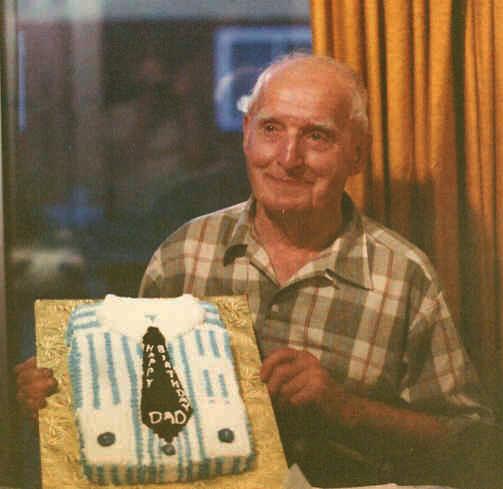
The date was August 4, 1977, Lloyd A. Read’s 87th birthday, at Lloyd and Lillie Read’s home in Turner, Oregon. Present were Lloyd, Lillie B. Read, his brother Ross Read, Ross’s wife, LaVerne Read, Lloyd and Lillie’s daughter Marjorie Andrews and her husband, Fred, and their children Allen, Marci, and Karen. Allen secretly brought a tape recorder.

Lillie: [Discussing daughter Loretta & George’s purchasing of burial vaults] . . . I want to be where . . . oh, he says “Do you want an inside vault or an outside?” She says, “I want an outside. I want it so I can get out and play pinochle if I want!”

Marci: Auntie Retta’s going to play pinochle on her grave?

Lillie: He says, “You’re so different from most of the people that come out here with the long face and if you mention anything, why, they’re ready to shoot 'em. She just . . .

Marci: Well, Grammy, are you going to get out and play pinochle up at Turner Cemetery?

Lillie: I don’t know how.

Marci: You don’t know how!?

Lillie: I couldn’t possibly play. I couldn’t even play a game of cards with anybody. When I grew up, my father said, “Cards are tools of the devil!” We was never allowed to have a deck in the house. Never. And neither did Grandpa’s folks. They didn’t allow any in the house.

Marci: How did you come to start allowing them?

Lillie: I never did. [chuckle] I never did.

Marci: But Grandpa has some right now.

Lillie: When he first started to play solitaire was when he went to Port Orford in ’52 without me and the men that he went down there and was working with, why they all sat around and played cards while he sat around with nothing to do. So he got them to show him how to play solitaire. And then about ’58 or something like that, I got the flu and I just couldn’t sit and do anything. And I said . . .

Marci: So you learned to play solitaire.

Lillie: And I said, “Lloyd,” I said, “Teach me how to play solitaire.” Now, we play alone, but we never play together. We never played a game of cards with anybody.

Marci: Oh, I see.

Lillie: We just never did; we never allowed the kids to do it.

Marci: Well, did you finish seeing these? [photographs] No, you didn’t.

Lillie: Oh, now that’s, that’s good; that’s a good one.

Karen: You’re not supposed to leave the paddle in the hole [she and her dad were making ice cream].

Fred: All right, come here one of you wise guys and help me!

Marj: [Laughing] It’s not that hard, is it yet?

Karen: Scoop around it and help him.

Marci: You can’t get it out?

Fred: Nope.

LaVerne: He left the paddle in the ice cream maker. Now he can’t get it out.

Lloyd: Yeah?

Marci: Oh well, that’s my dad.

Lloyd: Put it on the stove and melt it, Fred. It’ll come out.

Ross: Let’s sit on it for a while.

LaVerne: This is somebody’s chair—I don’t know whose.

Marci: Yours.

Lloyd: If you can’t get it out, you’ll have to cut slices out of the ice cream.

Ross: Get a hacksaw.

Lloyd: Yeah, I recommend a hacksaw.

LaVerne: That was some cake she baked for you, wasn’t it? [Barbara had made a cake that looked like a fancy shirt front.]

Lloyd: Isn’t that a peach?

LaVerne: Well, it sure is; it’s the cutest thing I ever did see.

Fred: Well now. [He got the paddle free and was dishing up ice cream.]

Marci: Oooh, look at it! Here it is.

Lloyd: You like that, with a collar on, a tie, everything.

Marj: “Happy birthday Dad” it says.

Marci: Whoops! Oh dear! That’s okay, didn’t do anything to it. [She almost ruined the cake turning it around.]

Allen, who had been holding the tape recorder on his lap under the kitchen table, stopped the recorder and smuggled it out, and we all ate cake and ice cream. The next day we confessed to Grammy and Grandpa about the tape, and they laughed.

Tuesday, June 13, 2017

Lillie and Dodie Interview, 1983

Interview with Lille Belle Munroe Read 
and Medora Munroe Copeland

Interviewers: David Andrews and Marj Andrews
Including comments by Lloyd A. Read
October 1, 1983, in the Reads’ kitchen in Turner, Oregon


David: Where have you lived in your lifetime?

Lillie and Dodie: Little Rock, Arkansas; Nampa, Idaho; Marshfield (Coos Bay), Oregon; Portland, Oregon; several cities in California [Dodie]; several cities in Oregon [Lillie]; and Washington State [both].

Lloyd: As I was trying to figure it out yesterday—how many different places we lived—as near as I could figure it’s 54 different houses. But I—we—built 10 of them. We built them ourselves except the last two. We had to get a registered, licensed electrician and plumber. Otherwise, I put in the wiring, plumbing and carpentry work for 10 houses.

Dodie: I’ll tell you one thing; when I was about 7 years old, Dad had moved to Nampa, Idaho. We kids walked most of the way from Nampa, Idaho, to Coos Bay, Oregon, behind a covered wagon.

[Coos Bay was then called Marshfield. Later Dodie told us that John rode a horse and helped break the trail as the track over the Cascades was difficult. She noted that they traveled past Three Sisters in the central Cascades. They traveled over McKenzie Pass into Eugene. Dodie commented that there were “freezing nights” and that they “slept under blankets and a tarp” and sometimes found snow blanketing them in the morning. They traveled in the winter.]

Lillie: We started out with three horses. When we got to Vale—my brother was riding our best horse—the fellows at the blacksmith shop wanted to buy them. We told them they weren’t for sale. We got a little ways from Vale and stopped for the night. Dad would always hobble the horses when we stopped for the night. Dad and John went to a nearby farm house to buy eggs and milk and stuff for our breakfast next morning. We kids had laid a canvas on the ground and we were all lying down there singing near the campfire. Dad came back and said, “Where’s the horses?”

Dodie: They were stolen. They were gone completely. We stayed there about a week looking for them.

[Later conversation revealed that they were able to find only one horse, their worst one, about a mile away. The horses were grazing quite close to the camp. The thieves must have come up in the dark, removed the hobbles, walked and then ridden the horses away.]

Lillie: We looked for them but could never find them. Daddy had to buy another one on the way to Coos Bay.

David: What were the significant reasons for the family moving?

Dodie: Dad had to move to get work. He took what work he could find.

Lillie: When we moved from Little Rock to Idaho, it was because of his work. He was a finisher for the railway coaches for Iron Mountain Railroad. He was a finishing carpenter, that’s what he did. After Mother died, he was never, never settled. Mother died when I was 6½ or 7. He was never settled. One of his cousins lived out here in Oregon. She kept writing to him. He came as far as Idaho and he worked for a year. Then he came on to Oregon and he stayed in Oregon for the rest of his life. He never went back.

David: What did he do when he went to Idaho?

Dodie: Worked on a dam.

David: Which one?

Lillie: Boise—oh, the one at Boise! [Bureau of Reclamation’s Boise Project]

Marj: What did he do in Marshfield?

Dodie: Worked on houses.

Lillie: Built a bridge. Odd jobs, whatever he could get.

Marj: How long were you in Marshfield?

Lillie: Just a year.

Marj: Then where did you go?

Lillie: We were coming on to Oregon—it was 1905, the year of the fair. We lived there [in Marshfield] because he didn’t want to go to Portland because of the World’s Fair. When we did come [to Portland] in 1906, we stayed in a hotel and then we went out and bought the two lots at [place name unintelligible].

[The Fair was the Lewis and Clark Exhibition of 1905 in Portland, Oregon.]

Lloyd: Dora, did you start school in Nampa?

Dodie: No, Little Rock! We started school in Little Rock.

Lloyd: You were 7 years old in Nampa, I thought you said a while ago.

Lillie: No, that’s when our mother died.

Marj: But you were born in '97?

Lillie: I was born in '92.

Dodie: I was born in '95.

Lillie: She was born in '95. I was three years older than she was.

Dodie: And we came from Nampa to Coos Bay in 1906.

Lillie: 1905!

Dodie: It was the winter time.

Lillie: She [Dodie] was 10.

Lloyd: You were 10 years old in 1905.

Lillie: We came to Portland from Coos Bay in 1906 on a big ship.

Marj: Up the coast and up the Columbia River—that must have been fun.

Lillie: That was my only ocean trip. And I tell you—we came near to feeling dead until we came to Astoria. The captain asked Dad, “Where are the girls?” and when he found out we were sick he said, “You go down to the kitchen and tell the chef you want some quinadine [?]. Take it to them. It will help them settle their stomachs.” And it did; it worked.

David: When you got to Portland, what happened at that point? What did you do there?

[Unintelligible for several lines; something about Dodie getting sick and Lillie nursing her.]

Dodie: You were working at Meier and Frank’s [to Lillie]. You took care of me and went back to work at Meier and Frank’s.

Lillie: That’s where I missed my calling. I had three different doctors say I’d missed my calling. I should have been a nurse. When I was 16 . . .

Marj: You should have had a degree, because you were a nurse anyway.

Lillie: Well, this one doctor, when Pauline was born, he told me when Pauline was born, I was May’s nurse then. She had been close to [unintelligible]. There was one doctor and one midwife in the town. Well, the Baptist preacher’s wife had a baby the same night and her husband went for the midwife and Paul [May’s husband] went for the doctor. So we had the doctor and they got the midwife. So when the baby was born, the doctor said, “Can you dress this baby?” I said, “I guess I can.” I never did it before, but I did dress it. [Laughter] When the nurse came I said, “What did I do wrong?” She said, “You didn’t do anything wrong.” She says, “Who taught you how?” I said, “I never dressed one before.” I did put the slip on her. She says, “I wouldn’t have put the slip on her, the only thing I wouldn’t have done that you did.” When May got up and I went to go back to work at Meier and Frank’s, the doctor said, “If you’ll go to [a nursing school name?] and train for a nurse, I’ll put you through.” I said, “I can’t do it. I didn’t do well in high school and I can’t read Latin and stuff like that.” He said, “You’re a natural nurse and if you’ll go, I’ll put you through.” Well, I didn’t have anybody to advise me, so I went back to Meier and Frank’s and went to work.

Soon after that I took care of John. He had lumbar pneumonia—both lungs. Nine days I took care of him—night and day. Carl was a baby [1918] and was crawling on the floor. The doctor took care of John until—he was unconscious for eight days. When he came to, he called for the doctor. The doctor said, “Don’t thank me. If you hadn’t had that nurse, you’d have never come through. So you thank your sister; she’s the one to thank. The doctor can give her orders, but if they’re not carried through,” he said, “it’s no good.” He said, “You’ve missed your calling.” I had three doctors tell me that.

I never had my kids in the hospital except for tonsillitis. If they got burned, I’d take care of them. If they had pneumonia, I’d take care of them. Going back to about two years old, Herbie [something] that morning [unintelligible—something about Marlene being very sick.] They didn’t bring that baby over 'til late in the afternoon. I said, “Thelma, why didn’t you bring her before?” Thelma replied, “Well, I thought she’d be all right.” I fixed that baby a bed when I took two of the dining room chairs and put them together. She was breathing so hard she shook those chairs. That evening Thelma said, “Well, I’m going to call the doctor.” I said, “You don’t need to call the doctor now. It’s broke [the fever].” I said, “She’ll be all right.” But she called the doctor and he come out. He said, “If she isn’t better by morning then you call me.” I said, “Okay.” The next evening at 6 o’clock, he and his nurse came to the door and he said, “Where’s that baby?” I said, “She’s sitting in the high chair eating her supper.” He said, “I thought we had a case of pneumonia on our hands.” I said, “You did, but I cured it before you got here.” [Laughter.]

The last person I took care of was my husband and I could have shot him. He was determined to go to Salt Lake to a convention. This was three or four years ago. He had just gotten pneumonia first before that convention. He said, “I'm all right.” I said, “You’re not all right.” So we went. And I’ll tell you, he wasn’t well. I wasn’t sure what to do if he did pass out. The last night we were there he said, “If anything happens to me while we’re here take my body home.” I was so provoked.

Marj: He was half dead when they got off the bus. They’d taken the bus home.

Lillie: He was sick. I kept giving him this medicine and putting stuff on him. [?] carry a plastic bag. Well, we ran out of kleenex, so I bought a Big Mac and took the paper napkins that come with it and cut it up in quarters.

David: What events best illustrates the character of family members?

[The first few lines were unintelligible.]

Dodie: [Referring to Lillie] She’s an angel! She’s the best one in the whole family. She’s always helped anyone that would come; give them the shirt off her back. She took care of me when I was sick, for quite a while. She wouldn’t let anybody in or out. She stayed with me all the time. I was about 11; she was 13. I missed the rest of the year in school.

Lillie: David, just sum it all up; that’s what God wanted me to do and that’s what I’m doing. That’s all there is to it, and I don’t think there’s anything more.

Dodie: [?] It shows [something] she had a baby.

David: What’s a good example of what your sisters are like?

Lillie: Oh, I don’t know. [Unintelligible—they were talking about the lots they lived on in Portland while their dad was away working.] . . . we were in tents. Daddy didn’t have a house built [yet]. I don’t know, maybe we’d been onery to May or something; I don’t know what it was. Anyway, she said she’s going up to visit these friends of ours up there, up the hill. Well, we waited for her to come home. And waited and waited and waited and she didn’t come home all that night. So the next day we walked up to see where she was. She was up there with Amanda, a friend of hers. She was about May’s age, 17. May said, well, if we weren’t so onery to her she wouldn’t do this!

Marj: Where was Grandpa and John?

Lillie: Daddy worked. John also worked [away from home].

Dodie: When Daddy come home on weekends then he’d take off again to San Diego.

[Apparently he worked in the Bay Area, Los Angeles, and San Diego, California whenever he could find work there and then would come home to Oregon.]

Lillie: He went where he could get work. He come home on weekends. We had credit at the grocery store on [? Street]. It was one big grocery store.

Marj: Oh, that’s where you met Alice.

Lillie: That’s where I met Uncle Carl and Alice. She’s still alive. She came out this year. She came to see me at the Home. She came out with the Central Christian Church.

Marj: Yes, I remember you telling me.

Lillie: I’ve known her since 1907. She told them, the group organizers, “There’s Lillie Read there and I want to go see her.” They told her she could.

Marj: I never knew Uncle John very well. He wasn’t around when I was little. What was he like when he was little?

Lillie: When we were still in Little Rock, he was blind for a while, you know.

Marj: No, I didn’t know.

Dodie: He could barely get around.

Lillie: He got the red sore eye. He was blind. He went to the blind school in [Little Rock?]. That’s where he got his education. But he got so he could see again. His eyes were never perfect, but he did have sight in both eyes. When we left Little Rock from our [?] . . . Agnes had got married. She was on the sixth [something]. Daddy had a pass from working at the railroad so long. They gave him a pass to bring himself and the children out to Idaho. So Agnes and Bill came home just before we were ready to leave. So they wanted to come, too. The only thing Daddy could do would be to take John’s pass and give it to Agnes. Bill said, “That’s all right. John and I can come out on the rails.” Daddy didn’t like that very well but he finally had to give in.

Marj: Riding the rails was underneath the cars.

Lillie: Just out of Denver, John fell. He got all banged up. That’s why his hand was crippled. His hand was kind of crippled. [See endnote.]

Marj: I didn’t know that. I can only remember going to Uncle John and Aunt Margaret’s house once.

Lillie: Oh. We used to go to dinner often.

Marj: I can remember being there and seeing his big fish pond. But I don’t remember him very well.

Dodie: Back in Denver the Salvation Army picked him up and took care of him.

[Their father traveled back to Denver and brought John to Nampa, Idaho.]

David: What happened to Bill?

Lillie: He came on to Idaho with us. When we came on to Portland, they [Agnes and Bill] stayed in Nampa. Agnes, she came out [to Portland] in 1907.

David: What family traditions can you remember? For example, where did your dad and mom come from?

Lillie: Daddy came from Michigan.

[While they were looking at pictures, Lillie identified her grandfather William Orlando Munroe as an old time preacher: “He’s got his Bible in his lap.” Two more pictures elicited these comments: “This is what we looked like two years after we got married.” And: “This is a picture of us five girls.”]

David: Grammy, do you remember any history of your mom and dad? Where they came from?

Lillie: We don’t know too much.

Dodie: Dad came from Oshkosh, Wisconsin. Mother came from Tennessee, I believe.

Lillie: We were living in Arkansas when she died.

Dodie: No, I said she was born in Tennessee.

Lillie: Yes, she was born in Tennessee.

Dodie: I don’t know what town.

Lillie: You see, Mama had been married before and her husband died. She had two little children.

David: Was that a Mr. Johnson?

Lillie: Yes, Mr. Johnson.

David: Do you know his first name?

Lillie: No, the only thing Daddy has in the genealogy was where he married Mary Jane Johnson and where she died. [Her first husband was Barney S. Johnson.]

David: And she had two children?

Lillie: Yes, two children, a girl and a boy. [Actually Annie and another girl who died young.] That’s who I go back to see in Arkansas, is her children [Annie’s]. They’re both there. She’s dead now, she died in 1957. Our Mama died in 1899. I wanted to go back there this year, but we didn’t. We got a wedding invitation to one of our great nieces in Kentucky. So when we got there I said we should see if we can change these plane tickets to go to Little Rock. They said we’d have no trouble. They wanted another $200 to do that and I said, “Nothing doing! I’m not going to do it.” So we didn’t go to Little Rock this year. It would have cost us $500 extra just to go down there, so that’s why I didn’t go to Little Rock this year. Maybe I’ll go next year.

David: Do you remember anything more about your mom? Where she was born other than Tennessee? Anything about her parents?

[Several lines unintelligible.]

Dodie: . . . where she grew up . . .

Lillie: . . . Luther Pond . . .

David: Run that by me again, Grammy. Pond? Luther Pond? What was he or where is he?

Lillie: He was a cousin.

David: Cousin?

Lillie: Yes.

David: Cousin of your mom?

Lillie: No. Cousin to me. He was Mother’s sister’s boy. He took this picture. He was a photographer.

[They were looking at a picture of the family Lillie visits in Arkansas. Mr. George D. Pond married her mother’s sister Frances. He was from England, Arkansas and was the photographer, not Luther.]

David: Is he still living?

Lillie: Don’t know!G

David: Do you know where he is?

Lillie: No, don’t have any idea. We never kept up after we kids left and grew up. The last time we saw him or heard of him was when we left Little Rock. [Luther died in the 1918 flu epidemic.]

David: When was that, 1907?

Lillie: No, that was in 1903. 1904 we were in Idaho. 1905 in Coos Bay. 1906 came on to Portland. He was just a kid but his father was a photographer. He was a little older than me. Three years older than me and I was 7, he was 10.

Lillie: During the year the family lived in Nampa, we were very poor. We girls received a few pennies for our allowance. May and I concocted a scheme and took all the pennies and covered them with mercury so they looked like dimes. We then gave them to Jessie and Dodie and sent them to the store to spend them. Our father found out what we had done and tanned our hides.

Dodie: Once Lillie and Jessie were horseback riding bareback. The horse trotted along and they bounced up and down. Lillie, she also bounced backward until she fell off the horse over its tail and landed on the hard ground.

Dodie and Lillie


*************End*************

Note: The story told about Bill and John riding the rails when the family moved from Little Rock to Idaho is probably based in fact, but it couldn’t have happened during that move, since Bill Allen and Agnes met in Idaho and were married in December 1904, when Agnes was just under 17 and Bill was 22, and just before the rest of the family moved on to Oregon. Agnes and Bill followed to Oregon not long after her family moved. It is more probable that the accident happened when John and Bill were traveling around the West, getting work where they could and trying to get home on the weekends.

Monday, June 12, 2017

Sketch of the Life of Lillie Belle Munroe Read, part 2

This is the second part of a two-part story I wrote over ten years ago about the life of my grandmother, Lillie Read. For the first part of the story, click here.

Lillie was a careful mother, even at the young age of 19. Still, she had hard lessons to learn. Her second child, Earl Lester Read, named for Lillie’s father, was born on January 2, 1914, got sick almost immediately and died on the 20th of that month. Lillie was disconsolate and blamed herself for not knowing what to do to save her baby. She vowed that she would never lose another one, no matter what. They moved from Portland to Aumsville, where Herbert Raymond was born July 15, 1915, followed by Walter Carl on November 11, 1917 (Carl later changed the order of his name).

Meanwhile, Lillie’s brother and sisters married, lost spouses, and remarried, and all her siblings’ families were growing. John and Margaret had Barbara in 1921. Agnes and Bill had Mary Agnes in 1907. About 1914 Agnes married Ame Nelson and in the winter of 1915 they had Edgar, and Mildred was born to them in 1916. After Ame’s death, Agnes married Ed Clow and they had Naomi in 1924 and Eugene in 1926. May and Paul Rieboldt’s daughter, Pauline, was born in February 1909 and their son, Paul, in March 1912; then after Paul Sr. died in June 1912, May married Bud Hallett, and their son, Ashley, was born in April 1916. Two years later Bud died in Yokohama, Japan. In December 1920 May married Owen Cade and they had Minnie Lee Love in July 1924 and Owen Lester in March 1926. Jessie married Frank Page about 1912 and Cecil Lewis was born in June 1913; Francis in February 1915; Thelma in February 1917; Hazel in December 1918; Thomas in June 1920; and Beatrice in April 1922. Jessie later married a Mr. Putnam, whose daughter Edith married Dodie’s son Clyde. Jessie married George Downing last. Dodie married Ray Copeland about 1915 and had Alfred in August 1917; Clyde in September 1919; Iva in 1921; and Jack in 1923. The Munroes gathered for frequent family reunions on their father’s land in McMinnville, Oregon.
Far left: Agnes holding Mildred, her daughter Mary Agnes next to her and son Edgar holding her hand;
Back left: May holding Ashley with Pauline in front of her and Paul in front of Pauline;
Center: William Lester Munro holding his grandsons Cecil Page and Herbert Read;
Back right: Lillie with her daughter Viola Read in front of her; Jessie next to Lillie and
holding Thelma with Francis Page in front of her; Far right: Dodie holding Alfred

During these years Lloyd was getting whatever work he could find. Times were hard for the family throughout that decade and into the 1920s as they struggled to make ends meet. Lillie and Lloyd carefully kept all their expenses and income recorded in little notebooks, writing down every penny they spent and saving as hard as they could. Lloyd recalled that he pounded the pavements day after day looking for work—even a day’s worth of work would help keep his family from want. Sometimes he came home and couldn’t keep from crying in frustration and despair at their situation. Lillie listened and told him to keep up his spirits and not lose hope. Lloyd recalled working in Aumsville on a crew erecting the first electric poles. He worked in the flour mill in Aumsville and in a store in Turner. He once said he even installed outhouses in rural Marion county. In Portland he worked as a logger, a carpenter, a longshoreman down on the docks, a grocery delivery man with a horse and wagon, and as a laundry delivery man also with a horse and wagon. Lillie had a growing family to manage.

World War I was raging in Europe and they heard the news that American boys were starting to enlist. Although only 26 years old when America joined the war, Lloyd didn’t consider the military because of his age and family situation. But the growing military swallowing young men meant that more jobs for young men like Lloyd were available for a time. The family moved back to Portland after Carl’s birth and there Ruth Loretta was born on July 10, 1919.

Lloyd said that the reason they named all the children names that had L or R in them, or both, was that they liked the way the sounds rolled off the tongue. He didn’t like shortening any of the children’s names or giving them nicknames or calling them by their middle names, but he was overruled several times. Lillie knew the value of shorter names, and the additional value of a formally stern pronouncement of a child’s full name signaling to the child that he or she was in more than the usual trouble. But Lillie said her children were generally good, giving her little trouble—especially, she twinkled, when she got out the hazel switch!

Her sixth child and third daughter, Charlotte May, was born September 12, 1921, the day before Lillie’s 29th birthday. Charlotte became Retta’s special playmate. Between Charlotte’s birth and the next living child, Lillie said she had a miscarriage. Next Clarence Austin was born a healthy boy. Then came another miscarriage. Florence Alice was born on April 8, 1927. Lillie got mad at her children about baby Florence’s name; she had named this baby for one of her twin sisters who had died before Lillie’s birth. The children said they were going to call the baby “Flossie.” Lillie declared that sounded like the name of a cow and wouldn’t let them. Maddeningly, the children persisted. So Lillie overruled them and called the baby Alice instead. The name stuck and Lillie had solved that problem to her satisfaction.

During that year Lloyd joined the Railway Mail Service, having worked a few years earlier on the extra board, now getting a permanent appointment as a mail handler. Finances were a little easier on the family, although with that many mouths to feed, Lillie continued to exercise constant careful budgeting.

Lillie decided she was through having babies. However, she was surprised to be expecting one more about three years later. The pregnancy didn’t go as well as the others; Lillie was 37 years old and had borne eight children and lost two already. She had to go to the hospital for this birth, unlike any of the others. Marjorie Lorraine, born in the Good Samaritan Hospital (now the Adventist) in Portland, was the last child.

By this time, 18-year-old Viola was working steadily, and 15-year-old Herbert was working at whatever odd jobs he could get. Carl was crazy about baseball—he lived for the sport, playing anywhere and everywhere he could. Eleven-year-old Retta took over much of Margie’s care, calling her “Monkey” affectionately. Lillie, tired and not in the best of health, was relieved to turn over the care of the littlest ones to her older children. It worked at the time, but the youngest children grew up with problems in their relationships that affected their own children.

During the Great Depression, the economic woes that greatly afflicted many throughout the world did not affect the Read family very much. Lloyd’s job with the Railway Mail Service was a government position and very secure. They escaped the worst of that time, but Lillie was always very careful with money and did not allow her children to waste things, nor to have what she considered non-essentials. She believed in the adage, “Use it up, wear it out.” She charged her groceries, but she carefully paid the bills on the first of every month. She had a charge account at Meier and Frank’s from the time she had worked for them, and she would use that to take the children in to buy shoes. The store at that time had an x-ray machine that you would put your foot into with your new shoe on to see if the shoe fit properly. You could see your foot bones and nobody thought of cancer from the radiation.

Lillie in the 1930s
In the mid-1930s Lillie’s children began courting and marrying. Herb married first, on March 4, 1935 in Vancouver, Washington. His bride was Thelma Pearl Hobaugh, a lovely person. Herb and Thelma’s daughter Elizabeth Ann, Lillie’s first grandchild, was born almost a year later. On June 3, 1938, Viola married John Pringle Crawford at home in McMinnville. On March 31, 1939, nineteen-year-old Retta married George William Jones in Vancouver, not telling her folks until afterward. George’s folks were McMinnville neighbors. Then Charlotte married Ernie Redding on October 13, 1939 in Vancouver, and Carl married Dorothy Helen Greer on January 9, 1942 at Dorothy’s church in Sunnyside, Washington. Lillie and Lloyd attended all the weddings except Retta’s, and Lillie went alone to Sunnyside for Carl’s and Dorothy’s, as Lloyd had to work.

In 1936 they moved to a 36-acre farm near McMinnville. This farm had originally belonged to Lillie’s father, and when he left it to go live with his daughter May, George Jones’ parents had worked the farm for him until he sold it to Lloyd and Lillie. All the Munroe family reunions had been held on this farm, and Lillie continued the tradition. They built a new house on the place. She used the tiny old home as a chicken house so she could sell and trade eggs for other things.

She had one or two cows that her boys milked. Margie remembered Clarence milking the cows and squirting the milk into the barn cats’ mouths. Those cows would behave for Lillie, but not for Lloyd. When he tried to milk them, they’d kick over the pail, or they’d get their tails free and swish them in his face, or they’d kick him, and he’d get only a cupful or so; he’d be very angry and bruised and sure the worthless cows should be sold. But for Lillie they’d stand perfectly still, and she’d have a gallon of milk out of them in no time.

Most animals behaved for Lillie. Once Thelma was given a little pig as a pet by her sister Eleanor. When the pet pig got too big to be a pet, it came out to the ranch at Stafford to live. One day when Carl and Dorothy were there, Dorothy and Marj heard a great commotion from outside, and they went out to see Carl and Lloyd chasing that pig, trying to get it back into its pen. They were swearing and sweating, unable to get it to go in any direction they wanted. It really was an enormous pig by this time. Marj and Dorothy became hysterical with laughter, watching the futile endeavor. Lillie came out, took one look, uttered an exasperated “Oh for heaven’s sakes!” and strode over to the pig, who became instantly docile as she took it by the ear and led it right into its pen.

Lillie did most of the farm work herself, driving the old plow horse and later the tractor. Lloyd kept the woodpile stocked, but Lillie did most everything else. Perhaps she worked too hard on the farm; she had a nervous breakdown about 1936 and Herb and Thelma and their family came out to live with them and take care of things for a while.

Lillie prided herself on learning to bandage up and doctor all the problems of her growing family. She never allowed any of the children to go to the hospital, except to be treated for tonsillitis. All other illnesses she learned how to manage. She used “Unguentine” for just about every cut, scrape, burn, or other injury presented to her. She never wanted her children to have stitches. When a doctor recommended stitches for one of the children, she refused, applying her ubiquitous Unguentine and taping the cut closed. She claimed that the resulting scar was far smaller, almost unnoticeable, compared to what it would have been had the doctor been able to have his way and put in stitches. She was probably right. The only thing she was unable to manage was Lloyd’s stroke, which happened about 1932. He never recovered full feeling in his left leg, but after his initial recovery it wasn’t obvious to any but those who knew already. Lillie’s nursing skills continued to be called upon by various older members of the family, and she frequently spent nights away from home nursing an elderly relative of hers or Lloyd’s.

One in particular was Lillie’s Aunt Ada’s sister, Lovisa Merryfield Johnson. Ada had married Lillie’s uncle James Munroe in 1890. Aunt Ada was someone the girls remembered as being very stern, very strict. You minded Aunt Ada. Her sister was softer, sweeter. Lovisa was an invalid for many years, and Lillie took turns with Aunt Ada’s daughter Mabel taking care of Lovisa every other night from early 1947 until October 1948. In the 1940s Lillie often took care of sick grand-babies for her daughters. One of Charlotte’s twin daughters stayed with Lillie for her first two weeks; they gave her oil of peppermint to strengthen her stomach.
The last Munro Family picnic on July 4, 1939 at the McMinnville farm. Lillie's handwriting is on this photo.
Margie's handwriting, identifying the people in the picnic photo.

Early in 1940 Lloyd traded the farm in McMinnville for a house with a gas station and store in Canby. Behind the store were tourist cabins. He did not consult Lillie, who was furious at him for trading away her farm. He had thought he was doing her a favor by reducing her work load, but that is not the way things worked out. Lillie and Lloyd moved to Canby with Carl to help, leaving the younger children living with Retta and George until the school year ended. But with Lloyd working full time, it very soon became clear that the cabins and store were too much for Lillie to manage even with Carl’s help, so by June they began trying to trade it away, finally selling it over a year later and moving to a house in Portland.

Lillie and Lloyd, 1940s
They bought 70 acres of land in Stafford, but they lived in Portland until September 1942. Then at the time Alice and Margie were getting ready to start their first day of school for that year, Lillie lost an argument with Lloyd about where the girls should register in school, and they moved out to a one-room cabin on the Stafford land, with no plumbing, no running water, and no electricity. Lloyd’s rationale for this move was the threat of Japanese bombs during the War. Pearl Harbor had been attacked the previous December, and Lloyd was sure that Portland with all its important shipping would be a target too. He wanted his family out in the country where they would be safer. Out in the cabin at Stafford they used kerosene lamps, chopped wood for the stove, and went into town once a week for tub baths and to do the laundry. Lillie didn’t like it! Within a year, the house was expanded with separate rooms for the girls and parents, but still it had no indoor plumbing for a while.

One thing it had was a telephone, which was Alice’s and Margie’s lifeline to the modern world. Margie recalled their friends phoning and putting the phone next to a radio that was tuned in to their favorite shows or music. And of course all the people on the 9-party telephone line were welcome to listen in! That they did listen in on other people’s conversations for entertainment was well known, and Lillie would have a fit at her teenage daughters Alice and Margie for calling Clarence, who was living in town, and the three of them regaling each other with made-up tales of their wild dates, which would set the neighbors to talking plenty about the Reads!

World War II was well underway. Lillie was glad that none of her sons had to see action, and that her sons-in-law came home all right. Herb wasn’t eligible for military service. The Selective Service demanded a birth certificate for Carl, and since no certificate had been created for him at birth and the attending doctor was dead, Lillie found one of the nurses or midwives who had been there who provided an affidavit that they sent in. Then Carl began training in the U.S. Air Corps, but because of a sports injury that interfered with his ability to perform at full capacity, he was honorably discharged. Late in the war, Clarence trained as a bombardier in the U.S. Air Corps, but the war ended before he had to go overseas. Ernie had been in the Marines before he married Charlotte; however, he wasn’t drafted during the war because of health problems. George fought in Europe and then in the Philippines with MacArthur’s liberation army. He was wounded at one point and recovered in a hospital in Manila. He came home with a Japanese sword, but most of his other possessions had been stolen. John was in the army, supposed to go to officer training but sent by mistake to infantry training and from there to combat in Europe. He fought in North Africa and in the Battle of the Bulge. He was invalided back to the States. Lillie was always thankful that they came home whole. That John and George refused to tell their experiences was another thing altogether; nobody pressed them and nobody discussed it much in those days.

During the war there was an extensive system of rationing throughout the country. But Lillie and Lloyd weren’t much affected by it. They had ration coupons for the things they needed. Lloyd was still working for the Railway Mail Service, so they were able to have a car, and because they lived on the farm at Stafford, they were able to have gasoline and rubber rations to keep it going and on good tires. One concession they made to gasoline rationing was to withdraw from the Oregon City Christian Church and attend the nearby Stafford Baptist Church for the duration of the war.

About the time the war ended, Alice married Thelma’s brother Guy, but the marriage was quickly annulled, and Alice married Claude Dewey Funk, a veteran of the U.S. Navy who had fought in the Pacific. The next two weddings of Lillie’s children were both church weddings with lots of guests. Margie married Frederick B. Andrews Jr. in the little church at Stafford. Fred was a veteran of the U.S. Army radio engineers and during the war had helped set up the radio communications system for the Pacific Theater. Later that summer in St. John’s Christian Church in Portland, Clarence married Myra Annabelle Byerlee, born in the Belgian Congo to Christian missionaries. At the end of the 1940s Charlotte and Ernie were divorced, and in August 1950 Charlotte married William Arnold Hattan.

Lillie very much enjoyed her family. She was always full of jokes and playfulness, which her children and grandchildren inherited, some with more than their share! When Fred was courting Margie and began coming to Sunday dinners, he was at first astonished by how much everyone teased each other. Once he brought his rather proper Aunt Ruth with him, and Ruth Boedefeld didn’t know what to think when Lillie, who commonly got up and down at least a half dozen times to fetch and serve things throughout the meal, suddenly found herself unable to stand up because her apron strings had been surreptitiously tied to her chair. She apologized to Miss Boedefeld, but the same thing happened again and then again, until even Ruth couldn’t stop laughing. Lillie would sputter at them, “Oh, you kids!” And then she would laugh too.

It seemed that Lillie’s years of child rearing were over. But at the end of 1951 a new daughter came to Lillie. Lillie’s sister Jessie Munroe Downing was the guardian of a little girl named Barbara Adams, and Jessie told Lillie to take and raise Barbara if anything should ever happen to her, Jessie. Barbara had gone to her first week of school with the other little girl Jessie had taken in, and when they came home for lunch, the two little girls found their foster mother dead at the kitchen table of a heart attack. Jessie’s husband took little Mary to her biological mother and delivered Barbara to Lillie and Lloyd. Lillie liked stories and Barbara’s origin was related in at least two versions. One story told was that Barb’s father was Cecil, one of Jessie’s sons, and her mother a girl that Jessie took in. But this story was told for its entertainment value and was not at all true. Lillie never did tell Barbara the true story. It wasn’t done in those days for adopted children to know about their true parentage.

Lloyd and Lillie bought a builder’s supply store in the Coos Bay area, where Lillie had lived as a girl upon first moving to Oregon, and they built and restored a couple of older homes in the vicinity of Port Orford. Lillie liked working in the store and found that her ability to make friends easily won them many loyal customers as well as friends. While they were in this area, Lloyd’s mother, May Corlinda Robertson Read, came to live with them until her death in March 1954. Her early feelings toward Lillie had indeed changed completely; Lillie was the only one she wanted at the end of her life to take care of her. Lillie’s brother John also came to live with them in the late 1950s. Barb grew up mostly in Port Orford. Alice and Claude came with their family to live in this area too, and eventually they took over the builder’s supply.

The Reads stayed there for almost ten years before selling their interest to Alice and Claude and moving back to the Turner area. When they moved to Turner to a house on Mill Creek, Barb soon met and married Walt McGinnis. A huge storm that thrashed Oregon in October 1962 nearly destroyed Lillie and Lloyd’s house when trees came down on the garage, crushing the roof in. Mill Creek flooded too. And their property in Port Orford was damaged as well. They had to repair everything before all the sales could be finalized.

In October 1960 the children all gathered at Kern Park Christian Church in Portland to celebrate Lillie and Lloyd’s golden wedding anniversary. In succeeding years, their wedding anniversaries became the focal points of family reunions. Most of their grandchildren were also at their 60th anniversary in 1970 along with great-grandchildren, and the news media came to their 70th anniversary in 1980, duly noting their 35 grandchildren, 56 great-grandchildren, and a few great-great grandchildren starting to be born. The family began holding half-anniversary parties every April with full anniversary parties in October after this celebration. Their 75th anniversary party was the last of the really big parties. Clarence had called a television station (Channel 8) and the news media came and filmed the couple who had been married three quarters of a century. They interviewed Carl after interviewing Lloyd and Lillie. Over 200 people attended the celebration.

Lillie and Lloyd, Christmas 1981 (photo by Marci Andrews)
Lloyd and Lillie moved back to Turner in 1969, taking a home they eventually donated to the Turner Christian Home. In the 1980s Lillie began having a harder time taking care of herself, Lloyd, and her house by herself. First they tried living with Marj and Fred in Aumsville in 1983, but it didn’t work out. Then Lillie and Lloyd moved into another Turner house owned by the Turner Christian Home, with Retta and George living behind them through the block so that Retta could come over daily and help them out with what work needed to be done. That worked for a few more years.

In 1988, when Lloyd was no longer getting out of bed much and was no longer eating well, Lillie had to make the difficult decision for him to live in a nursing home in Sublimity. Lillie didn’t like him having to live apart from her, but she recognized the necessity of the situation, and over his protests did what she had to do. After Lloyd’s death on April 29, 1989, she moved with Herb and Thelma into a house in Salem. Lillie and Lloyd had been married for 78 years, 6 months, and 24 days, a lifetime and then some. Many people asked her the secret to such a long marriage. To one of her granddaughters, she said, “You have to be prepared to take much more than you ever thought you’d take!”

At Lillie's 99th birthday party (photo by Marci Andrews)
In September 1991 the family gathered for a 99th birthday party in Salem for Lillie. She had for years told everyone in her family that though they may be aging, she was certainly not. She was still 16, no matter what anyone said. But at her 99th birthday party she was proud of her advanced age. At her birthday party, her sister Dodie, last of her siblings still living, came from California, as well as most of Lillie’s children and a number of grandchildren and great-grandchildren who brought great-great-grandchildren. They had dinner at a Chuck-a-Rama restaurant, one of her favorite places to eat, after a day of merriment in which Lillie declared that the present she most wanted was a riding lawnmower so that she could drive herself to the mall and shop without needing anybody else to drive her in a car.

She had given up driving a number of years before, after having an accident on Highway 101 north of Yachats, when she had been driving and suddenly found herself off the side in a ditch without knowing how she’d gotten there. The car was barely still under warranty and she put in a claim that the steering was faulty, but the shop where the car was taken kept it until the warranty ran out, which was soon. The car dealers said she damaged the steering in the accident and refused to pay. In any case, she didn’t trust herself driving after that. However, she had allowed Lloyd to continue driving them both until he was in his 90s and they were forced to realize that he had to quit driving when his vision became too dim and his reflexes too slow to enable him to drive safely anymore. She didn’t like losing her independence though, and she joked and schemed ways to get it back.

When Lillie cooked dinner, Lloyd wanted all of it to be eaten; he used to say if people didn’t eat everything, he’d get it fried for breakfast. Lillie was a plain cook, but she made excellent breads, pastries, pies, and cakes. She fried, boiled, or baked meat and potatoes for most main meals, and she didn’t generally go in for complicated recipes or fancy sauces. For spices she chopped onions and added ground black pepper to many dishes. Then Lloyd salted or sugared everything (he even sugared ice cream and puddings) on top of that. He was afflicted with sour stomach most of his life and took baking soda in water for it (he might have been lactose-intolerant, said Marj). Dinner was always at midday and supper was in the evening. Many times the same food was served at both meals. Lillie baked all her bread, and it was always wonderful bread. She made excellent pie crust, but she couldn’t pass along the skill to those who had trouble—she would tell them, “Add about so much of this and so much of that, and then mix it with your fingers until it feels right.” And that’s all the help you’d get. Hers would turn out perfectly while yours might be painted and used for a doorstop. At least you wouldn’t get it fried for breakfast.

Lillie always did a lot of handwork. She crocheted afghans, lace collars, edgings for pillow cases and towels, doilies, and cloths. She embroidered many, many pillowcases that she gave to children and grandchildren. She spent decades making quilts for her family. She learned how to paint on fabric, and she painted many quilt blocks with birds or flowers. She sewed them together with long strips of solid fabric between the rows, and then she used a bed sheet or another piece of fabric for the back. When she couldn’t see well enough to use the sewing machine anymore, she had others put the quilts together for her, and then she would tie them. She made big quilts and baby quilts, single quilts, double quilts, and queen-sized quilts. She laughingly prodded her younger granddaughters to get married when they were at the advanced “spinster” ages of 31 and 32, promising a hand-painted quilt to the one who got married first.

Lillie was no stranger to tragedy in her family, having experienced family deaths since early in her childhood. In June 1938 her father passed away at the age of 80 down in San Diego, California. He had been living there with his daughter May. Next Jessie died in 1951; brother John died in 1960; sister Agnes died in 1967; and sister May in 1975. Lillie lost two grandchildren and several great-grandchildren too. However familiar death was, it was never easy, and yet, Lillie never feared death for herself.

In March 1992 Lillie began having strokes. Herbie Jr. and his wife, Jerrie, a nurse, were there when the first major stroke happened and took care of her until more help arrived. It became necessary for Lillie to have round-the-clock care that first week of March, and her children and grandchildren traded off. Retta came and stayed every night in Lillie’s room. Thelma, Barb, Viola, and Marj traded off during the days, coordinating all the nursing efforts and managing the visitor load. Lillie didn’t have as many visitors as wanted to see her; she was much beloved of her descendants and friends, and everyone wanted to see her as much as possible when it looked as if she wouldn’t be with them much longer, but she was easily tired and increasingly confused. She had more little strokes, and she died March 16, aged 99 years and 6 months old. She was interred in Riverview Abbey Mausoleum in Portland next to Lloyd.

She always said that she wanted none but fresh flowers for her grave, what you could grow yourself or what grew wild in Oregon; if anybody thought they were going to bring what she called “bought” flowers, she was going to get right out of her grave and tell that misguided person a thing or two! So when you go visit her grave, be prepared.
Lillie, age 96

Sunday, June 11, 2017

Sketch of the Life of Lillie Belle Munroe Read, part 1

On September 13, 1892 Lillie Belle Munroe was born at home, a house in rural Newton County, Arkansas. She came into a blended family consisting of nine persons: her father,
Lester Munroe
William Lester Munroe, a curly-haired, blue-eyed Scot about 34 years old; his father, William Orlando Munroe, a widower about 66 years of age; Lillie’s mother, Mary Jane Whittenton Johnson Munroe, about 33 years old and widowed at the age of 21 before she married Lester; Lillie’s half sister Annie Frona Johnson, about 13 years old; her half brother Sam Johnson, age 12; her brother John Munroe, age 7; her sisters Agnes Telitha, age 5, and Allie May, age 4; and her brother Claudy, age 1. She would have had twin sisters, Flora and Florence, but they had lived only 4 and 5 months through the summer of 1886, when John was a little over a year old and before Agnes was born. A little over a year and a half after Lillie’s birth, her younger sister Jessie was born, and then the Christmas when Lillie was three years old, Medora was the last to join their family. When Lillie was only a baby, her brother Sam ran away from home. He was not there most of Lillie’s childhood, but she certainly knew him.

Mary Jane Munroe
May remembered their mother, Mary Jane, as a sweet-tempered, quiet, patient lady who liked having a houseful of children and never minded the noise and commotion they created. All children adored her. May said once that the only thing her mother did that a lady wouldn’t want known in public was once in a great while, she’d dip snuff. She’d send the little ones out to the field to find a certain kind of twig that could be chewed and frayed to make a paintbrush or a toothbrush, or, sometimes, a snuff dipper. Snuff is pulverized tobacco, and when put on a brush and held in the mouth against the cheek, the user would get a nicotine rush through the mucous membranes. That type of tobacco use did not contribute to lung cancer, but it could cause the teeth to loosen, and sometimes caused cancer in the mouth.

William Orlando Munroe
Tragedy struck the Munroe family a year after Dora’s birth when Claudy died in January 1897 at the age of 5. Lillie’s grandfather William Orlando Munroe, who lived with them, died the next year after Claudy, in April 1898. He was 71 years old. Then the worst tragedy for the family came eleven months later when their mother, Mary Jane, died on the 3rd of March 1899 in Little Rock. Lillie was only six and a half years old. Her brother John was 13 years and 10 months; her sister Agnes had turned 11 just four days before; her sister May was two months shy of 10; her little sisters Jessie and Dora were four and three years old. Her older sister Annie Johnson was about to turn 20. It was a severe blow to the family, especially to Lester, who never recovered from his wife’s death.

Munroe Girls about 1897
Front: Agnes, Dora, Jessie
Back: May and Lillie
Lester Munroe stayed in Arkansas for a few years more, and then he decided to move his children and himself to the northwest where there was room—land and opportunity. Annie, recently married to Clint Cusick and with a home of her own, stayed in Arkansas. Sam was living in Georgia and eventually moved to Pennsylvania.

In 1903 Lester and the children took the train to Idaho, settling in the Nampa area where Lester hoped to get work on the Bureau of Reclamation’s new Boise Project, among other things. The family was poor and lived in a sod house. John worked some and was in charge of his sisters, 15-year-old Agnes, 14-year-old May, 10-year-old Lillie, 8-year-old Jessie, and 7-year-old Dora, called Dodie. Because Lester couldn’t get all the work he had thought, the family became very, very poor. One time May and Lillie thought up a scheme to beat their poverty by coating pennies with mercury to make them look like dimes and sending Jessie and Dodie to the store to spend them. When their father found out about it, he tanned their hides!

Late in 1904, Lester decided to move on to Oregon, but Agnes was upset about the plan. On Christmas eve 1904 Agnes eloped and married William Henry Allen, who came from Pennsylvania.

In 1905, Lester bought a spring wagon and two horses to draw it, and with another horse, they headed west to Oregon. Lester drove the spring wagon loaded with all their belongings, and John rode the other horse alongside the wagon. Lillie and her sisters generally walked.

They hadn’t been on the trail long when they stopped near Vale, Oregon, and some men at the general store asked about buying their horses. Lester replied that the horses weren’t for sale. That night they stopped to camp, and Lester rode back to Vale to buy more supplies they would need before heading into the wilderness of eastern Oregon. He had taught John and May to shoot and they both had pistols, May said. She said he told them strictly that they must hobble the horses and not ride them anywhere, but stay close and guard the camp. As soon as he was out of sight, May recalled, she and John jumped on the horses and rode around a while. She could not remember whether she and John had remembered to hobble the horses or not after they were through. She thought they had. Meanwhile, the younger girls remembered they had spread the canvas tarp on the ground with their bedding on top, and they lay and sang while looking up at the stars. When their father came back to camp, he asked, “Where are the horses?” They were gone! The family searched for days and found one horse, but they never found the other. Those unscrupulous men had evidently led the horses quietly away while the children were singing. Their father was furious and certain children got a whipping for their negligence.

They continued their journey across Oregon, walking beside the wagon. The weather was cold as they traveled through the central Cascades past Three Sisters. When they got to the top of the McKenzie Pass, they had to spend a night in the snow because a broken-down wagon blocked the trail ahead, which led down through Eugene and over the coast range to the shores of the Pacific Ocean. They settled in Marshfield, near what is now Coos Bay, where their father got work building bridges, houses, and whatever else he could find. He had been a finishing carpenter for the railroad back in Little Rock, so anything to do with woodworking was what he tried to get now. The children lived in a camp a little ways outside of the town because they couldn’t afford to rent or buy a house. They had cleared the brush and forest from some of the land and built a platform on which they erected their tents. They built a cook stove on which May cooked most of the meals. May and John hunted rabbits and squirrels sometimes for food. May remembered it being scary being off there by themselves a lot, but she also recalled liking being by themselves. They were a close and loyal family.

Munroe Family about 1905: Lester in the center;
clockwise from top: John, May, Lillie, Dodie, Jessie, Agnes
Lester decided to move to Portland, but he waited until after the World’s Fair (Lewis and Clark Fair) of 1905 was over. He did not want to deal with his teenage girls and the crowds that the Fair drew. Lillie was about 13 years old. John and their father were often away from home, finding work anywhere in the Pacific coastal states from Seattle to San Diego, and at first the family lived in tents on two lots their father had bought in Portland. May was in charge of the family, but her younger sisters weren’t easy on her. One day, Lillie and Dodie recalled, they and Jessie had been so “ornery” to May that May had announced that she was going up the hill to visit her friend Amanda to get away from her impossible little sisters. Lillie and the younger girls waited all night, but May didn’t come home until morning. When she came back, the girls cried, “Why didn’t you ever come home?” May replied that she would have if they treated her better. Not long after this time period, May married Paul Rieboldt, October 1, 1907.

In about 1906, Lester Munroe had finished a little house on one of the lots, so they had a better place to live. Dodie had become very sick soon after the move, and Lillie took care of her, nursing her night and day. The doctor told Lillie she was a natural nurse. When May was expecting her first child, Lillie was the one who stood by to take care of the baby. Paul ran for the doctor that night, and the doctor gave the new baby, Pauline, to Lillie with orders to dress her. Lillie had never dressed a baby before, but she guessed she could handle it. When the trained nurse arrived to take over, Lillie asked her whether she had done anything wrong? The nurse replied that she had done everything right, excepting maybe the nurse wouldn’t have put a little slip on the baby along with the other clothes. Lillie was happy with the praise. When John got double pneumonia, Lillie nursed him too. He was unconscious for eight days, and when he awoke, the doctor told him his sister was the one to have pulled him through. The doctor told Lillie that if she would enter a nursing school, he would pay her way. But she hadn’t done well in school and didn’t think she would be able to handle the course work, and without anyone else to advise her, she didn’t go.

Lillie’s schooling had been sporadic, and after she completed some high school in Portland, she looked for work, never to return to school. Despite her lack of schooling, Lillie was educated very well in many things. Besides nursing, one in particular was her botanical knowledge. She knew the names of all the domestic and wild flowers in Oregon, all the trees, all the shrubs. She was always a skillful gardener, although her methods could sometimes be unconventional. She used to tell her house plants, “Bloom, or I’ll throw you in the trash,” and they always obeyed her. She also read extensively. She always liked to learn new facts, esoteric and otherwise.

Lillie about age 16
In 1908 at age 16, Lillie was baptized in the Arleta Baptist Church in Portland, Oregon. Her father had earlier been a Seventh Day Adventist, but he didn’t go later in his life. Lillie was always a faithful Christian and church goer throughout her life. She read her scriptures regularly and she loved hymns, especially “Whispering Hope” and “In the Garden.” After her marriage she joined the Disciples of Christ Christian Church that her husband belonged to.

To support herself in her teen years, she was working in a mill in Portland when she heard that Meier and Frank’s department store needed a bookkeeper. She started studying bookkeeping at night while she kept working in the mill during the day, but then she landed a job as a clerk at Meier and Frank’s. She worked with lace and notions on the first floor (no cash register; she had to calculate prices and change), earning $17 a month. She said her room and board with Mrs. Douglas of Kern Park at that time was $10 a month, and she had to spend $2 a month for street car fare. Then she had to stretch the rest to do her washing and so on. And she wanted to be a missionary someday, so she was saving her last pennies each month with that in mind.

As a grown woman, Lillie was short. She was 4’11” at her tallest and later admitted she was 4’8”—but her feet always reached the ground, she said (except when she was sitting in someone else’s chair!). As a young woman she had reddish brown hair with a slight natural wave in it, and she had bright blue eyes and a pale complexion that freckled easily. She was never thin, but never too heavy either. She wore a small but wide shoe size, 4½, and when it was hard to find women’s shoes in her size, she could get put out about it. The selection was never very good for clothes and shoes in her size.

One day in 1909 she was riding the train from Portland to Yacolt, Washington with her sister May, who had been visiting her in Portland and, finding her suffering from a case of the flu, said, “You’re coming home with me.” While on the train, a young man stopped to talk to May for a moment, and then he went on. Lillie, feeling terrible and thinking she was looking her worst, nonetheless thought that the young man certainly looked interesting. She asked her sister who he was, “the young man with all that hair.” May told her his name, Lloyd Read. Before the train arrived in Yacolt, Lloyd had come back to find out more about the girl with May, red nose and all. And he got permission to call on her when they were back in Portland.

One of Lloyd's postcards
Their courtship lasted through 1909 and into the spring of 1910, with Lloyd seeing Lillie every chance he got and writing her postcards or just sending a postcard he thought she’d like even with no message on it to make sure she knew he was thinking of her all the time. In June they attended the social functions of the Portland Rose Festival together. After the Starlight Parade on June 11, 1910, Lillie accepted Lloyd’s proposal of marriage, and they were engaged.

Lillie’s father and family approved of Lloyd, but Lloyd’s parents disapproved of the match. They said Lillie was “white trash” and wouldn’t have anything to do with her. Even though Lloyd’s mother, May Corlinda Robertson Read, had had to walk partway to Oregon herself as a little girl and had known poverty, she felt that this poor girl from the South with little formal education would do nothing to help her son advance in the life that she had pictured for him. Lloyd’s father didn’t want his son marrying so young, and marrying a girl of a different religion at that. He wanted his son to go to college, to have material advantages. They tried to break up the match, even telling Lloyd that if he would call off the marriage, they would pay for him to get a college degree. He refused. They threatened to cut him off without a cent. He regretted their attitude, but he wouldn’t give up Lillie. He didn’t care what they said or did.

Lillie and Lloyd were married in Portland on October 5, 1910 at the home of the minister, Francis (Frank) Cook, at 795 E. Salmon St. On the marriage license Lillie reported her address as 247½ Fifth St., City and her occupation as chamber maid. She had lost her job at Meier and Frank’s and had gone to work in a hotel that belonged to friends of her family. After the wedding, while Lillie and Lloyd continued to live in the hotel while both of them worked, Lloyd’s parents pointedly showered money and privileges on their younger sons still at home and tried for a time to have nothing to do with Lloyd and his new wife.

That didn’t last. Lillie’s good humor, hard work, strong faith, and loving ways won them over. When Lillie’s first baby was born March 20, 1912, her mother-in-law was there to attend her. Viola Maybelle, named May for her paternal grandmother and Belle for her mother, was the first Read grandchild and great-grandchild. The Read grandparents were suddenly very proud! They had pictures taken with their granddaughter. She was probably spoiled rotten at first. Or she would be if she had the disposition to be spoiled, and if her mother had let her be—and Viola herself said she felt she was given much more than any of her younger siblings. Everyone was delighted with the baby, and more importantly, Lillie was finally accepted by the Reads.
Lillie and Lloyd at left, Lloyd's parents at right (Virgil and May Read)
Grandparents Clifton Kittridge Read and Elizabeth Nancy Porter Read
and Viola Maybelle Read, born in early spring 1912

This is the first of a two-part series. Click here to read part 2.